Mount Zion Baptist Church

Why it's listed
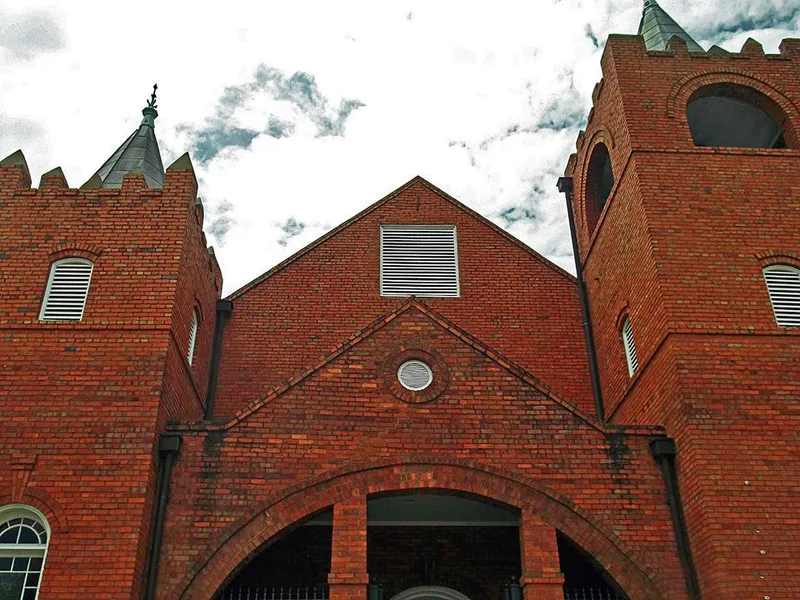
Mount Zion Baptist Church is a red-brick church completed in 1906 at West Whitney Avenue and Jefferson Street in Albany, Georgia. Church members built it with Late Gothic Revival and Romanesque Revival detailing, including two square towers of unequal height, eight-sided metal spires, arched windows and a pressed-metal roof. Inside, the sanctuary keeps its wood floors, pressed-metal cove ceiling and a baptismal pool concealed beneath the pulpit. The congregation was organized in 1866 and was the first African-American Baptist church within Albany's original city limits. In the early 1960s the building became a main gathering place for the Albany Movement. Its first public mass meeting took place here on November 25, 1961, and the SNCC Freedom Singers performed for the first time at that meeting. Martin Luther King, Jr., Ralph David Abernathy and John Lewis spoke to crowds that spilled into the street. Worship ended in 1972, and plans call for a Civil Rights museum.
Significance in brief: It is an intact early 20th-century brick church typical of urban African-American churches. It housed Albany's first African-American Baptist congregation, organized in 1866. It was also a primary meeting place of the Albany Movement, a civil rights effort of the early 1960s, and hosted its first mass meeting on November 25, 1961.
Machine-generated summary. This summary was generated by a language model from the official nomination document and has not been reviewed line by line by an editor. It may contain errors. Check the source document before relying on any detail. Source: nomination document (PDF) · National Archives catalog entry. NRHP reference 95000911, listed August 10, 1995. Summary generated October 2026 (model claude-sonnet-5-5, prompt v1.0-2026-10-29, confidence high).
Key facts
| Address | 328 W. Whitney Ave., Albany |
|---|---|
| County | Dougherty County |
| Listed | August 10, 1995 |
| Reference number | 95000911 |
| Resource type | Building |
| Period of significance | 1906 - 1963 |
| Architect / builder | Built by church members; no architect named (form lists n/a) |
| Architectural style | Late Victorian: Late Gothic Revival/Romanesque Revival |
| Criteria |
|
| Areas of significance | Black, Social History, Architecture |
| Level of significance | National, State, Local |
| Status (as stated in the nomination) | Worship use ended in 1972 when the congregation moved to a new building; current function listed as work in progress, with plans to rehabilitate it as a Civil Rights museum. |
| Acreage | 0.9 |
| Coordinates | 31.57199, -84.15557 (NPS GIS) |
What listing means for this property
Religious properties are listed for their architectural or historical significance, not their religious use. Listing is honorary and does not restrict the congregation's use of the building. The federal rehabilitation credit is generally unavailable unless part of the building is income-producing; some state programmes and preservation grants do cover religious buildings. Federal funding or permits trigger Section 106 review.
General information, not legal or tax advice. Rules change; confirm with your State Historic Preservation Office or a qualified adviser.
Sources and further reading
- National Park Service, National Register of Historic Places database (snapshot May 2026), reference 95000911.
- Nomination form (PDF, National Archives) — catalog entry
- Wikidata Q134297312
- This listing as JSON
Last updated October 2026. Found an error? See the editorial policy for how to report it.