Eastman Bus Station

Why it's listed
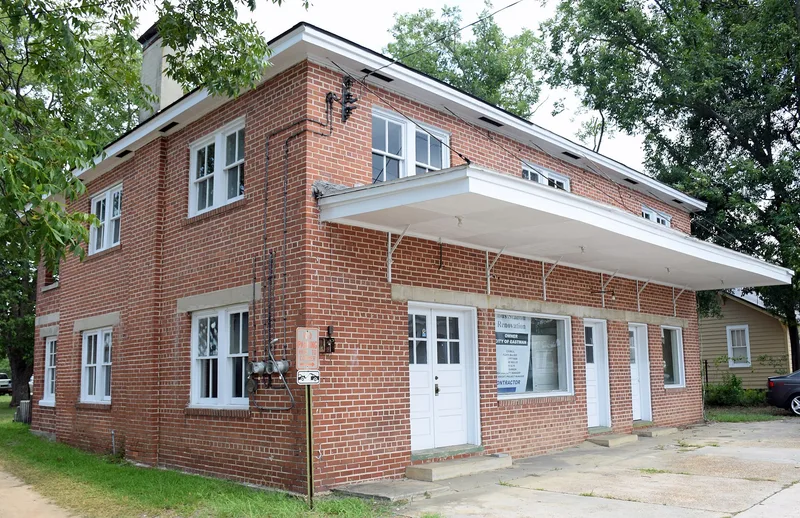
Built in 1945-1946 at the south end of Eastman's business district, this two-story brick building served as a bus station and Western Union telegraph office on the first floor, with the manager's family living upstairs. John Taylor Wilbanks, the local Greyhound agent, built it after outgrowing space in a gas station and drugstore. A rear addition followed in 1946, along with a garage and apartment behind the station. Buses stopped three or four times a day, and the station operated until 1983. The interior still holds the original ticket counter, men's and women's restrooms, a second-floor apartment, and a smaller waiting room and restroom designated for African Americans under segregation. The Georgia survey of over 50,000 properties identifies only three bus stations, and this is the only known one with a residence in its design. It was recognized for its architecture, its role in local transportation, and its record of segregated public facilities.
Significance in brief: The nomination calls it a rare surviving rural Georgia bus station and the only known one in the state that incorporates a residence. It is tied to Eastman's transportation history through Greyhound and Western Union service. Its separate waiting room and restroom for African Americans preserve physical evidence of segregation.
Machine-generated summary. This summary was generated by a language model from the official nomination document and has not been reviewed line by line by an editor. It may contain errors. Check the source document before relying on any detail. Source: nomination document (PDF) · National Archives catalog entry. NRHP reference 02000566, listed May 30, 2002. Summary generated October 2026 (model claude-sonnet-5-5, prompt v1.0-2026-10-29, confidence high).
Key facts
| Address | 305 College St., Eastman |
|---|---|
| County | Dodge County |
| Listed | May 30, 2002 |
| Reference number | 02000566 |
| Resource type | Building |
| Period of significance | 1945 - 1952 |
| Architect / builder | John Taylor Wilbanks (builder, named in the significant dates; Architect/Builder field lists N/A) |
| Architectural style | No style |
| Criteria |
|
| Areas of significance | Architecture, Transportation, Black |
| Level of significance | Local |
| Status (as stated in the nomination) | Listed as vacant/not in use. The City of Eastman bought it in 1999 and plans to rehabilitate it as a multi-purpose community building. |
| Acreage | 0.4 |
| Coordinates | 32.19512, -83.17487 (NPS GIS) |
What listing means for this property
For an income-producing building, listing (individually or as a contributing building in a district) is the gateway to the 20% federal rehabilitation tax credit on qualified rehabilitation costs, often stackable with state credits. Work claiming the credit must follow the Secretary of the Interior's Standards and be approved in advance.
Listing does not restrict a private owner acting without federal money or permits; where federal funding or licensing is involved, Section 106 review applies.
Noted as vacant in the nomination. Nomination documents can be decades old; current status may differ. If you are considering buying an empty listed property, read the due-diligence checklist.
General information, not legal or tax advice. Rules change; confirm with your State Historic Preservation Office or a qualified adviser.
Sources and further reading
- National Park Service, National Register of Historic Places database (snapshot May 2026), reference 02000566.
- Nomination form (PDF, National Archives) — catalog entry
- Wikidata Q134296544
- This listing as JSON
Last updated October 2026. Found an error? See the editorial policy for how to report it.