Anderson, Judge Clifford, House

Why it's listed
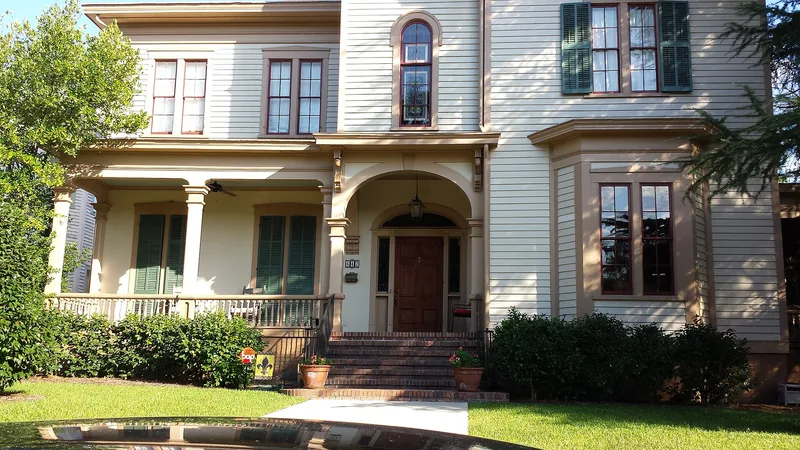
Built in 1859 at 642 Orange Street in Macon, this Victorian wood frame house was among the first in its neighborhood and overlooks Orange Street and Daisy Park. It rises two stories above a partial basement, with a three-story tower over the front porch. Distinctive details include arched-head tower windows, a heavy overhanging cornice with consoles, pedimented eight-light windows and unusual double-panel blinds. Inside are plaster walls, heavy Gothic cornice molding, oak floors and polished granite and marble mantels. Judge Clifford Anderson, a leading Georgia lawyer, built the house. He was the first president of Macon's YMCA chapter, served in the Confederate Congress, sat in the state legislature, served as state Attorney General and helped write the Georgia Code of 1895. His sister was the mother of poet Sidney Lanier. His son, Robert Lanier Anderson, later lived here. The house and the nearby Collins House represent mid-nineteenth-century architecture in the College Hill area.
Significance in brief: The house was built by Judge Clifford Anderson, a prominent Georgia lawyer, first president of Macon's YMCA chapter, Confederate congressman, state legislator and Attorney General, and an author of the Georgia Code of 1895. He was also the uncle of the poet Sidney Lanier. The house is also cited as an example of sturdy mid-1800s architecture, paired with the nearby Collins House in the College Hill district.
Machine-generated summary. This summary was generated by a language model from the official nomination document and has not been reviewed line by line by an editor. It may contain errors. Check the source document before relying on any detail. Source: nomination document (PDF) · National Archives catalog entry. NRHP reference 71000247, listed July 14, 1971. Summary generated October 2026 (model claude-sonnet-5-5, prompt v1.0-2026-10-29, confidence high).
Key facts
| Address | 642 Orange St., Macon |
|---|---|
| County | Bibb County |
| Listed | July 14, 1971 |
| Reference number | 71000247 |
| Resource type | Building |
| Period of significance | 19th Century (specific date 1859) |
| Architect / builder | Judge Clifford Anderson (builder) |
| Architectural style | Victorian |
| Areas of significance | Architecture, Social History |
| Level of significance | Local |
| Status (as stated in the nomination) | Listed in good condition, altered, on its original site, and in private residential use at the time of nomination. |
| Acreage | 0.9 |
| Within district | Macon Historic District |
| Coordinates | 32.83641, -83.63815 (NPS GIS) |
What listing means for this property
National Register listing is honorary for a privately owned home: it does not by itself restrict what an owner may do with their own money, and it does not require public access. Restrictions come from local landmark or historic-district ordinances, which are separate (how they differ).
Owner-occupied houses are not eligible for the 20% federal rehabilitation tax credit, which applies to income-producing buildings, but many states offer credits for homeowners. Listing also opens the door to preservation easements and to buying a plaque. Start with what listing means for homeowners, renovating a listed house and selling one.
General information, not legal or tax advice. Rules change; confirm with your State Historic Preservation Office or a qualified adviser.
Sources and further reading
- National Park Service, National Register of Historic Places database (snapshot May 2026), reference 71000247.
- Nomination form (PDF, National Archives) — catalog entry
- Wikidata Q134086238
- This listing as JSON
Last updated October 2026. Found an error? See the editorial policy for how to report it.