Vestal's Gap Road and Lanesville Historic District

Why it's listed
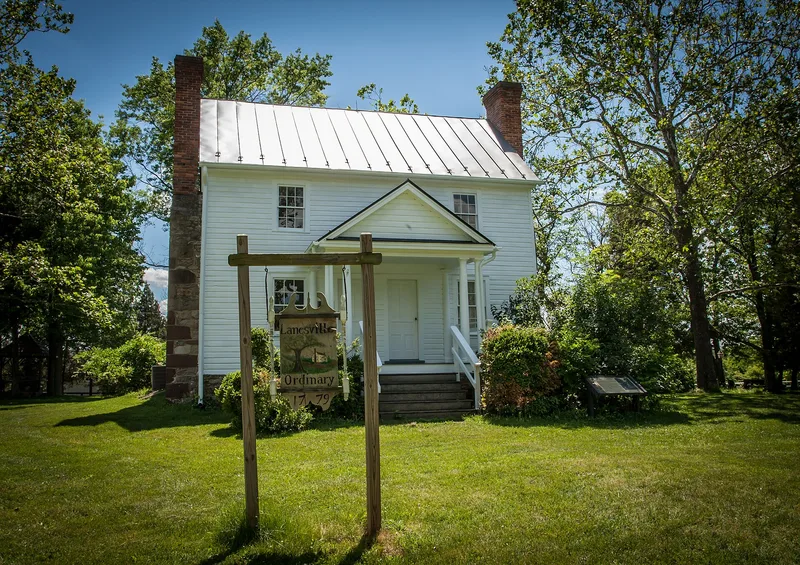
Within Claude Moore Park in Sterling, a short stretch of Vestal's Gap Road runs past Lanesville, a house and tavern built around 1807. The road trace, about six-tenths of a mile long, belonged to an early route from Alexandria and Leesburg toward the Blue Ridge and the Ohio country. Planters hauled tobacco along it, settlers used it to move west, and troops marched on it during the French and Indian War. George Washington also traveled it in 1770. Lanesville is a two-story timber-framed house with a stone foundation and stone end chimneys. It was licensed as an ordinary, serving travelers, and housed the Lanesville post office from 1807. The house was later enlarged and remained in the Bridges family from 1817 to 1941. Newer turnpikes replaced the road by the 1820s. The eastern section keeps the strongest historic character, with an unsurfaced bed and multiple alignments, and the road and house together show early settlement and travel in Loudoun County.
Machine-generated summary. This summary was generated by a language model from the official nomination document and has not been reviewed line by line by an editor. It may contain errors. Check the source document before relying on any detail. Source: nomination document (PDF) · catalog entry. Generated October 2026 (model claude-sonnet-5-5, prompt v1.0-2026-10-29).
| Period of significance | ca. 1725-Circa 1820 |
|---|---|
| Styles | Early republic |
| Areas of significance | Transportation, Architecture |
| Acreage | 7.5 |
| Boundary source | NPS cultural-resource GIS polygon |
| Full listing page | Vestal's Gap Road and Lanesville Historic District (property record) |
What listing means for this property
This is a historic district. Buildings within its boundary are either contributing (they add to the district's significance) or non-contributing. Owners of contributing income-producing buildings can claim the 20% federal rehabilitation tax credit; homeowners should look at state credits. National Register districts impose no design review by themselves; a local historic district ordinance, if one exists, does (the difference explained).
General information, not legal or tax advice. Rules change; confirm with your State Historic Preservation Office or a qualified adviser.