Urbanna Historic District

Why it's listed
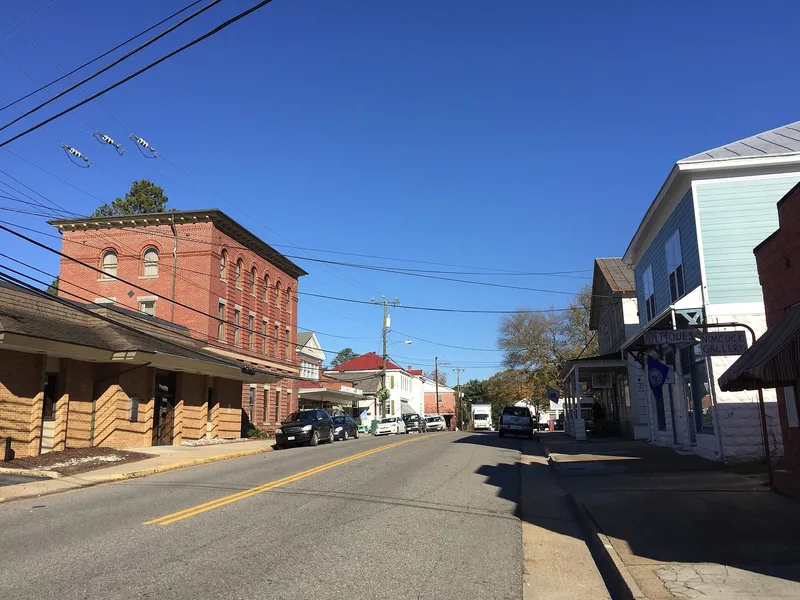
Urbanna is a small Tidewater port town on Urbanna Creek, near the Rappahannock River in Middlesex County, Virginia. It was created after a 1680 colonial act encouraging towns, and lots were first sold in 1691. Henry Towles resurveyed it in the 1740s, and the irregular street grid on his map largely survives. The district includes the 1748 courthouse, later altered into a church and now a women's club, which is one of only eleven colonial courthouses left in Virginia. Other early buildings include Lansdowne, a fine Georgian brick mansion, Wormeley Cottage, and the 1760s Old Tobacco Warehouse, now the library. Later buildings reflect the town's commerce and religious life, including Haywood's Store, the Bristow Store, the Romanesque Revival Bank of Middlesex and the Carpenter Gothic Baptist church built in 1896 by Charles H. Palmer. Queen Anne houses, bungalows and Colonial Revival dwellings fill out the streets. Together they record Urbanna's development from tobacco port and county seat to a local commercial center.
Machine-generated summary. This summary was generated by a language model from the official nomination document and has not been reviewed line by line by an editor. It may contain errors. Check the source document before relying on any detail. Source: nomination document (PDF) · catalog entry. Generated October 2026 (model claude-sonnet-5-5, prompt v1.0-2026-10-29).
| Styles | Georgian, Federal, Queen Anne (also Carpenter Gothic, Romanesque Revival, Colonial Revival, Bungalow, American Foursquare) |
|---|---|
| Areas of significance | Commerce, Exploration/Settlement, Politics/Government, Architecture, Maritime History |
| Acreage | 72 |
| Boundary source | NPS cultural-resource GIS polygon |
| Full listing page | Urbanna Historic District (property record) |
What listing means for this property
This is a historic district. Buildings within its boundary are either contributing (they add to the district's significance) or non-contributing. Owners of contributing income-producing buildings can claim the 20% federal rehabilitation tax credit; homeowners should look at state credits. National Register districts impose no design review by themselves; a local historic district ordinance, if one exists, does (the difference explained).
General information, not legal or tax advice. Rules change; confirm with your State Historic Preservation Office or a qualified adviser.