Union Hill Historic District

Why it's listed
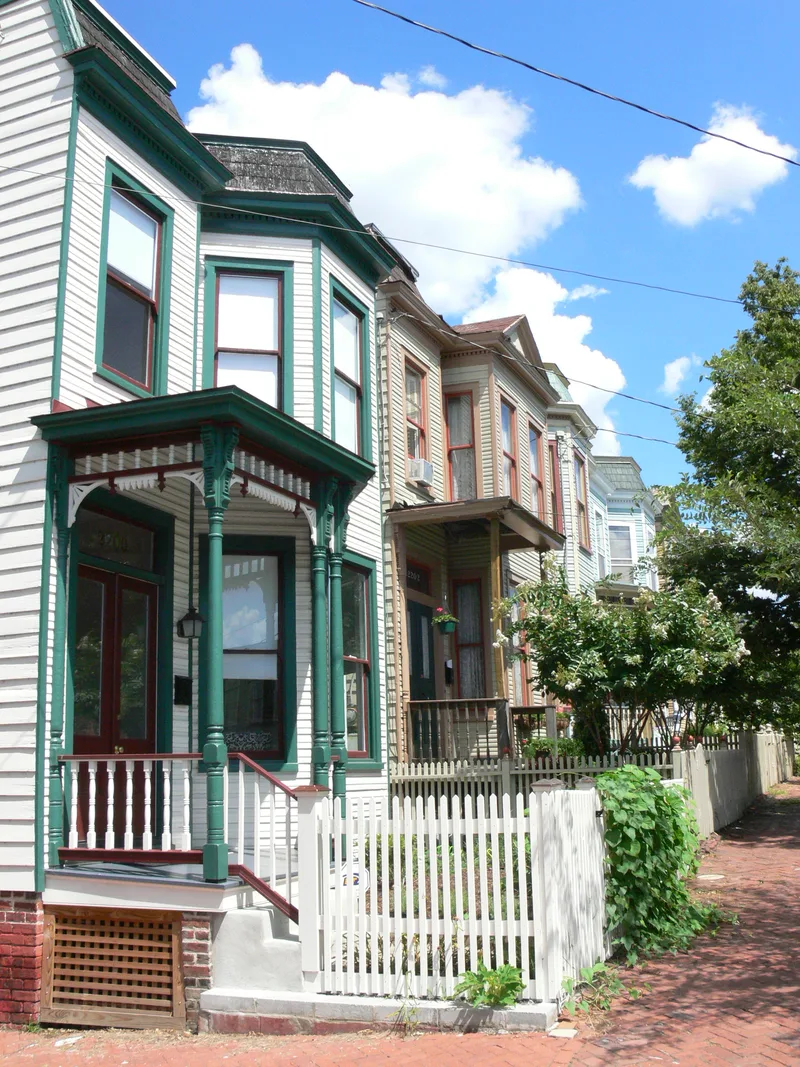
Union Hill is a residential neighborhood in Richmond's east end, set on hills once cut off from the rest of Church Hill by a deep ravine and the bluffs above Shockoe Valley. Laid out in 1805 by John Adams and Benjamin Mosby, its streets bend and climb with the terrain instead of following the city grid, producing odd triangular blocks. The district holds 369 buildings and a park, mostly modest frame and brick houses for tailors, tanners, carpenters and other working families. Many predate the 1867 annexation from Henrico County. Greek Revival houses and cottages dominate the antebellum period, followed by Italianate and Late Victorian dwellings and several Romanesque and Gothic churches along Venable Street. Street grading left many houses perched on raised foundations. Dozens of antebellum buildings have been demolished and abandonment remains a concern, yet the neighborhood keeps a high level of integrity and a distinctive sense of its historic setting.
Machine-generated summary. This summary was generated by a language model from the official nomination document and has not been reviewed line by line by an editor. It may contain errors. Check the source document before relying on any detail. Source: nomination document (PDF) · catalog entry. Generated October 2026 (model claude-sonnet-5-5, prompt v1.0-2026-10-29).
| Styles | Federal, Greek Revival, Italianate, Queen Anne, Classical Revival, Art Deco |
|---|---|
| Areas of significance | Architecture, Social History |
| Boundary source | NPS cultural-resource GIS polygon |
| Full listing page | Union Hill Historic District (property record) |
What listing means for this property
This is a historic district. Buildings within its boundary are either contributing (they add to the district's significance) or non-contributing. Owners of contributing income-producing buildings can claim the 20% federal rehabilitation tax credit; homeowners should look at state credits. National Register districts impose no design review by themselves; a local historic district ordinance, if one exists, does (the difference explained).
General information, not legal or tax advice. Rules change; confirm with your State Historic Preservation Office or a qualified adviser.