Sweet Briar College Historic District

Why it's listed
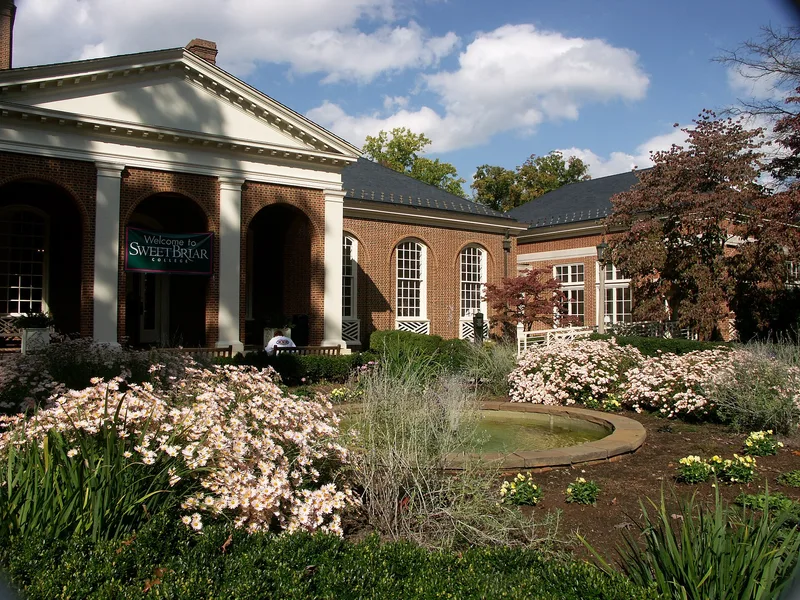
Sweet Briar College occupies a rural 3,300-acre campus south of Amherst, and a 27.22-acre core of it forms this historic district. Twenty-two brick buildings erected between 1906 and 1931 follow the designs of Boston architect Ralph Adams Cram, working with Lynchburg associate Pendleton S. Clark. They include six dormitories, the former refectory, a library, administration and classroom buildings, a gymnasium, a student health center and ten faculty residences. Built in Georgian Revival style, they feature Flemish-bond brick with glazed headers, slate roofs, stone or wood trim, and colonnades linking many of the buildings. Cram's plan, shaped by Beaux Arts ideas, arranges the campus on intersecting axes and draws on Jefferson's University of Virginia. Cost forced a scaled-back plan, and his formal landscape gave way to a naturalistic design associated with Richmond landscape architect Charles Gillette. The district was recognized for its architecture, as the work of Cram and his firm, and for a campus plan that remained largely true to his scheme from 1906 to 1942. Five later buildings fall outside this group.
Machine-generated summary. This summary was generated by a language model from the official nomination document and has not been reviewed line by line by an editor. It may contain errors. Check the source document before relying on any detail. Source: nomination document (PDF) · catalog entry. Generated October 2026 (model claude-sonnet-5-5, prompt v1.0-2026-10-29).
| Period of significance | 1906-1942 |
|---|---|
| Styles | Late 19th and 20th Century Revivals: Colonial Revival (Georgian Revival) |
| Areas of significance | Architecture |
| Acreage | 27.2 |
| Boundary source | NPS cultural-resource GIS polygon |
| Full listing page | Sweet Briar College Historic District (property record) |
What listing means for this property
This is a historic district. Buildings within its boundary are either contributing (they add to the district's significance) or non-contributing. Owners of contributing income-producing buildings can claim the 20% federal rehabilitation tax credit; homeowners should look at state credits. National Register districts impose no design review by themselves; a local historic district ordinance, if one exists, does (the difference explained).
General information, not legal or tax advice. Rules change; confirm with your State Historic Preservation Office or a qualified adviser.