Sunnyside

Why it's listed
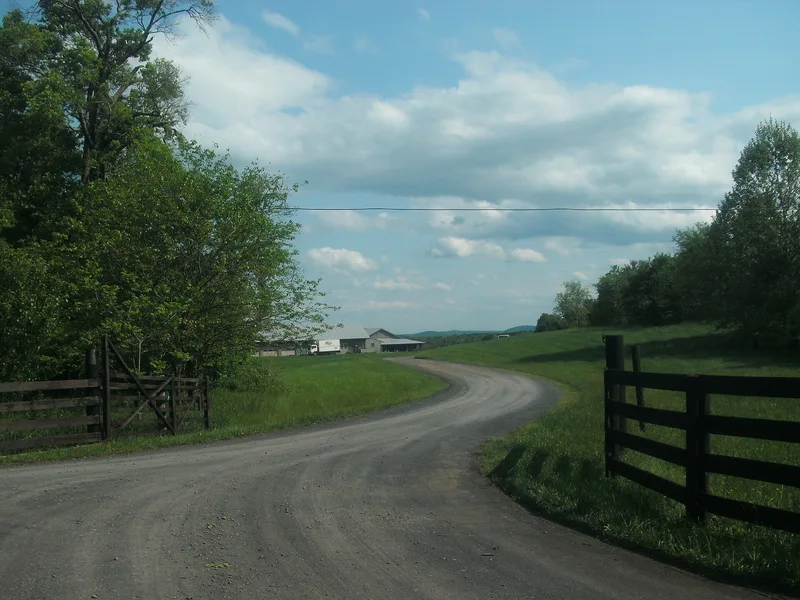
Sunnyside is a 421-acre farm district near Washington, Virginia, in Rappahannock County, set in a hollow beside Fodder Stack Mountain and Shenandoah National Park. Its main house began as a two-story log dwelling around 1785, gained a stone kitchen wing about 1800, a frame wing around 1850, and further additions in 1940 and 1996. Around it stand secondary dwellings, a stone slave quarters, smokehouses, a springhouse, a root cellar, a family cemetery and modern farm buildings. The property was bought by Henry Miller in 1780 and stayed with his descendants, including the Wood family, until 1996. Its main importance lies in agriculture: Charles Burrell Wood planted the first commercial apple orchard in the county here in 1873, and seedlings from his trees supplied later orchards. Sunnyside remains a commercial orchard today, with apples, peaches, vegetables and pasture. Its collection of farm buildings also records how a working farm adapted over time.
Machine-generated summary. This summary was generated by a language model from the official nomination document and has not been reviewed line by line by an editor. It may contain errors. Check the source document before relying on any detail. Source: nomination document (PDF) · catalog entry. Generated October 2026 (model claude-sonnet-5-5, prompt v1.0-2026-10-29).
| Period of significance | circa 1785-1954 |
|---|---|
| Styles | Other: Log House |
| Areas of significance | Agriculture, Architecture |
| Acreage | 421.9 |
| Boundary source | NPS cultural-resource GIS polygon |
| Full listing page | Sunnyside (property record) |
What listing means for this property
This is a historic district. Buildings within its boundary are either contributing (they add to the district's significance) or non-contributing. Owners of contributing income-producing buildings can claim the 20% federal rehabilitation tax credit; homeowners should look at state credits. National Register districts impose no design review by themselves; a local historic district ordinance, if one exists, does (the difference explained).
General information, not legal or tax advice. Rules change; confirm with your State Historic Preservation Office or a qualified adviser.