Skyline Drive Historic District (Boundary Increase)

Why it's listed
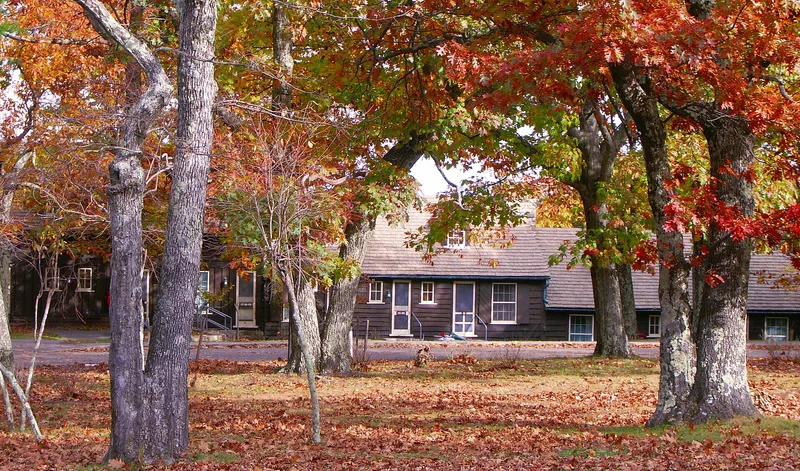
Five developed areas of Shenandoah National Park were added to the Skyline Drive Historic District: the Headquarters area near Luray, Big Meadows, Dickey Ridge, Simmons Gap and Piney River. Together they cover about 180 acres and roughly 147 resources, including picnic grounds, a campground, lodges, cabins, restaurants, maintenance buildings, employee housing and an administration building. Most were built between the mid-1930s and early 1940s, largely by the National Park Service with Civilian Conservation Corps labor and other Depression-era funding. The concessionaire, Virginia Sky-Line, built lodges and cottages designed by Richmond architect Marcellus Wright, Jr. The buildings follow the NPS Rustic approach, using local stone and wood, distinctive concrete shingles, and simple forms intended to blend with the mountain setting. The stone Administration Building of 1940 has chestnut paneling milled by CCC workers from blight-killed local trees. The period of significance runs from 1931 to 1952, and the areas retain high integrity despite a few later intrusions.
Machine-generated summary. This summary was generated by a language model from the official nomination document and has not been reviewed line by line by an editor. It may contain errors. Check the source document before relying on any detail. Source: nomination document (PDF) · catalog entry. Generated October 2026 (model claude-sonnet-5-5, prompt v1.0-2026-10-29).
| Period of significance | 1931-1952 |
|---|---|
| Styles | Other: NPS Rustic Architecture |
| Areas of significance | Politics/Government, Architecture, Entertainment/Recreation, Landscape Architecture |
| Acreage | 180 |
| Boundary source | NPS cultural-resource GIS polygon |
| Full listing page | Skyline Drive Historic District (Boundary Increase) (property record) |
What listing means for this property
This is a historic district. Buildings within its boundary are either contributing (they add to the district's significance) or non-contributing. Owners of contributing income-producing buildings can claim the 20% federal rehabilitation tax credit; homeowners should look at state credits. National Register districts impose no design review by themselves; a local historic district ordinance, if one exists, does (the difference explained).
General information, not legal or tax advice. Rules change; confirm with your State Historic Preservation Office or a qualified adviser.