Shockoe Slip Historic District

Why it's listed
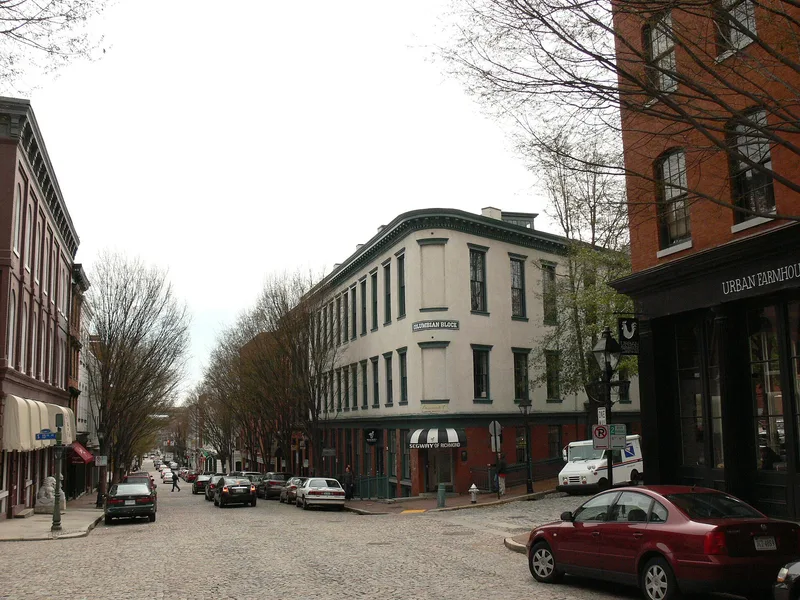
Shockoe Slip is a compact commercial neighborhood in downtown Richmond, built around a triangular, stone-paved plaza with a fountain at South Thirteenth and East Cary Streets. Warehouses, tobacco storage buildings and mills stood here as early as the eighteenth century, and the area was rebuilt after a fire in April 1865. The surviving buildings are mostly two to four stories of red pressed brick, with corbeled cornices, segmental-arched windows and storefronts framed by cast-iron columns and pilasters. Several warehouses faced the Great Basin of the James River and Kanawha Canal, linking the district to the canal trade. The Columbian Block, built in 1871 with Italianate features, anchors the plaza. The nomination values the district for its consistent scale, its rhythm of repeated three-bay fronts and its brick and ironwork. Later documentation notes its transformation from a blighted area into a restaurant, retail and visitor destination, and an expanded boundary that takes in nearby warehouse and railroad structures.
Machine-generated summary. This summary was generated by a language model from the official nomination document and has not been reviewed line by line by an editor. It may contain errors. Check the source document before relying on any detail. Source: nomination document (PDF) · catalog entry. Generated October 2026 (model claude-sonnet-5-5, prompt v1.0-2026-10-29).
| Styles | Italianate and High Victorian Italianate commercial buildings with cast-iron storefronts |
|---|---|
| Areas of significance | Commerce, Transportation, Architecture |
| Acreage | 10 |
| Boundary source | NPS cultural-resource GIS polygon |
| Full listing page | Shockoe Slip Historic District (property record) |
What listing means for this property
This is a historic district. Buildings within its boundary are either contributing (they add to the district's significance) or non-contributing. Owners of contributing income-producing buildings can claim the 20% federal rehabilitation tax credit; homeowners should look at state credits. National Register districts impose no design review by themselves; a local historic district ordinance, if one exists, does (the difference explained).
General information, not legal or tax advice. Rules change; confirm with your State Historic Preservation Office or a qualified adviser.