Saltville Historic District

Why it's listed
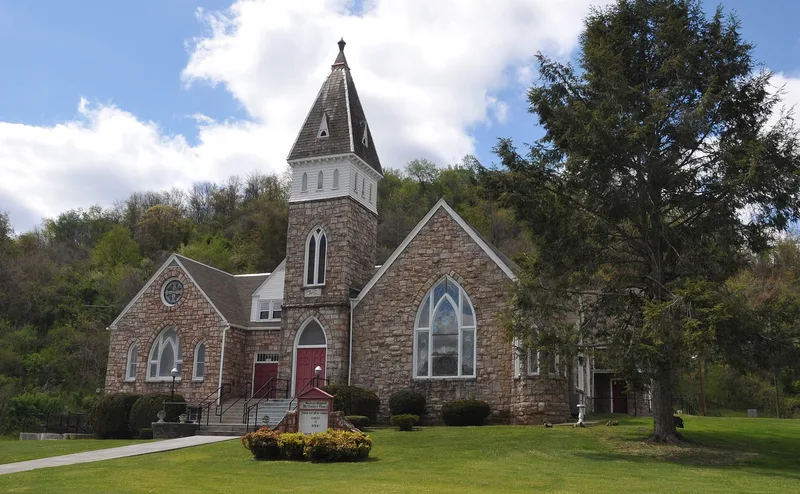
Saltville Historic District covers about 187 acres of the mountain town of Saltville in Smyth County, Virginia. It takes in the main commercial blocks along Main Street and Palmer Avenue and the houses around the old salt well fields, where brine was drawn for local industry and where excavations have found remains of a large salt works, probably an early Preston Salt Works site. The modern town grew after 1892, when the Mathieson Alkali Works bought the Holston Salt and Plaster Company and made Saltville a company town. The company built housing, a store, a hospital, schools and a post office. Surviving buildings include the limestone First National Bank, the Carpenter Gothic St. Paul's Episcopal Church designed by Baltimore architect T. Buckler Chequior, the Gothic Revival Madam Russell Memorial Church, the 1931 post office, and rows of company houses. Brick storefronts, Craftsman bungalows and Colonial Revival homes show the town's growth through 1950.
Machine-generated summary. This summary was generated by a language model from the official nomination document and has not been reviewed line by line by an editor. It may contain errors. Check the source document before relying on any detail. Source: nomination document (PDF) · catalog entry. Generated October 2026 (model claude-sonnet-5-5, prompt v1.0-2026-10-29).
| Period of significance | 1892-1950 |
|---|---|
| Styles | Classical Revival, Gothic Revival, Colonial Revival, Bungalow/Craftsman |
| Areas of significance | Architecture, Politics/Government, Commerce, Industry |
| Acreage | 187 |
| Boundary source | NPS cultural-resource GIS polygon |
| Full listing page | Saltville Historic District (property record) |
What listing means for this property
This is a historic district. Buildings within its boundary are either contributing (they add to the district's significance) or non-contributing. Owners of contributing income-producing buildings can claim the 20% federal rehabilitation tax credit; homeowners should look at state credits. National Register districts impose no design review by themselves; a local historic district ordinance, if one exists, does (the difference explained).
General information, not legal or tax advice. Rules change; confirm with your State Historic Preservation Office or a qualified adviser.