Ruffin, Edmund, Plantation

Why it's listed
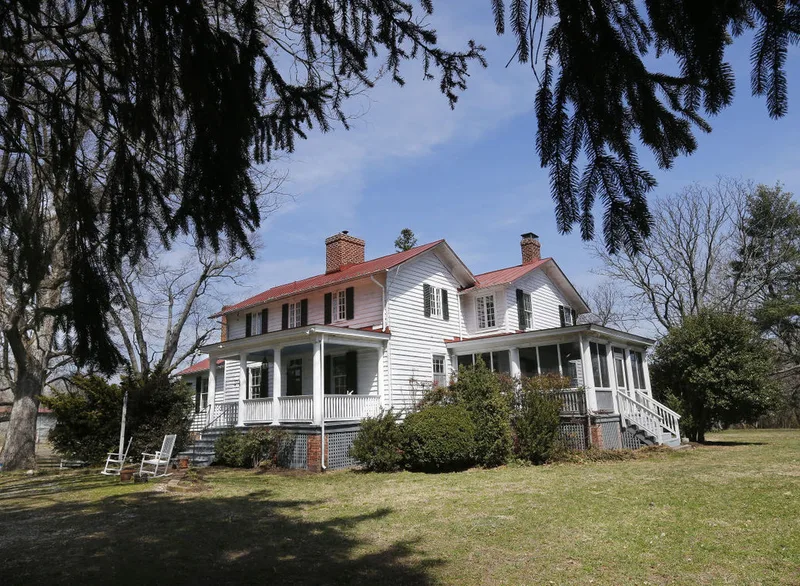
Marlbourne is a plantation in Hanover County, Virginia, about 17 miles northeast of Richmond, where Edmund Ruffin lived from 1843 until 1855. The white frame, two-story house looks over broad lowlands and has two-story front porch, a rear porch, and one-story wings, the east wing added in the 20th century. Only a dairy shed and a smokehouse remain of the original outbuildings. The surrounding fields still show traces of the marl pits and irrigation sites Ruffin used in his experiments. Ruffin helped revive worn-out Virginia soils by applying calcareous earths, wrote An Essay on Calcareous Manures, published the Farmer's Register, and became the first president of the Virginia State Agricultural Society. During his years here he also wrote pamphlets defending slavery and secession. He is buried in the family graveyard on the property. The nominated area follows the lands Ruffin owned between 1843 and 1855 and covers about 1,200 acres.
Machine-generated summary. This summary was generated by a language model from the official nomination document and has not been reviewed line by line by an editor. It may contain errors. Check the source document before relying on any detail. Source: nomination document (PDF) · catalog entry. Generated October 2026 (model claude-sonnet-5-5, prompt v1.0-2026-10-29).
| Period of significance | 1843-1855 |
|---|---|
| Areas of significance | Politics/Government, Agriculture |
| Acreage | 1200 |
| Boundary source | NPS cultural-resource GIS polygon |
| Full listing page | Ruffin, Edmund, Plantation (property record) |
What listing means for this property
This is a historic district. Buildings within its boundary are either contributing (they add to the district's significance) or non-contributing. Owners of contributing income-producing buildings can claim the 20% federal rehabilitation tax credit; homeowners should look at state credits. National Register districts impose no design review by themselves; a local historic district ordinance, if one exists, does (the difference explained).
General information, not legal or tax advice. Rules change; confirm with your State Historic Preservation Office or a qualified adviser.