Port Republic Historic District

Why it's listed
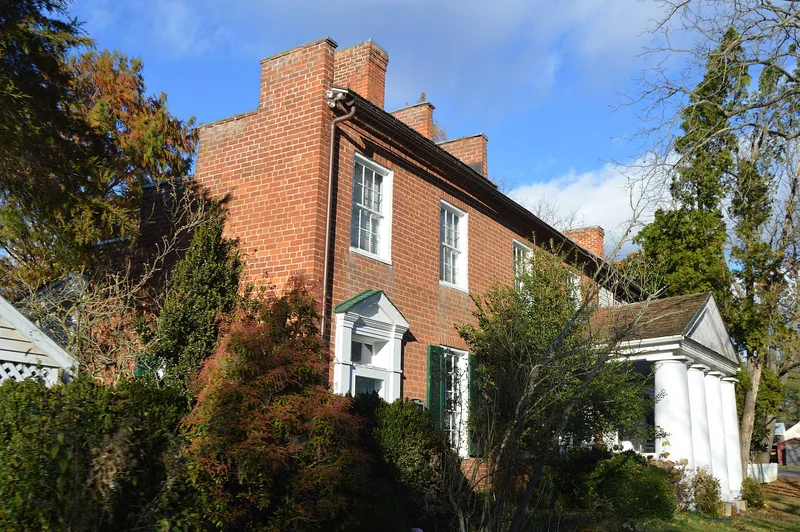
Port Republic is a small village where the North and South Rivers meet to form the Shenandoah River in eastern Rockingham County. Laid out in 1802 along two parallel streets, Main and Water, it grew into an industrial and commercial center with mills, a tannery, a foundry and a flatboat-building point. As the highest navigable point on the Shenandoah, it shipped flour, iron and other upper Valley products downriver. The railroad arrived in the 1870s and reduced the town's importance, though local industry and a prosperous residential community continued. Most surviving buildings date from the late 19th and early 20th centuries, many replacing structures lost in floods of the 1870s and 1880s; a few log and brick houses are earlier. The district also includes sixty-two archaeological sites and was the scene of the Battle of Port Republic in June 1862, the last battle of Stonewall Jackson's Valley Campaign. The town retains much of its original plan and a consistent scale.
Machine-generated summary. This summary was generated by a language model from the official nomination document and has not been reviewed line by line by an editor. It may contain errors. Check the source document before relying on any detail. Source: nomination document (PDF) · catalog entry. Generated October 2026 (model claude-sonnet-5-5, prompt v1.0-2026-10-29).
| Styles | Vernacular, with late 19th-century eclectic wooden Victorian houses and some Colonial Revival, Greek Revival and Federal details |
|---|---|
| Areas of significance | Industry, Community Planning and Development, Commerce, Historic - Non-Aboriginal, Military, Architecture |
| Acreage | 73 |
| Boundary source | NPS cultural-resource GIS polygon |
| Full listing page | Port Republic Historic District (property record) |
What listing means for this property
This is a historic district. Buildings within its boundary are either contributing (they add to the district's significance) or non-contributing. Owners of contributing income-producing buildings can claim the 20% federal rehabilitation tax credit; homeowners should look at state credits. National Register districts impose no design review by themselves; a local historic district ordinance, if one exists, does (the difference explained).
General information, not legal or tax advice. Rules change; confirm with your State Historic Preservation Office or a qualified adviser.