Poplar Lawn Historic District

Why it's listed
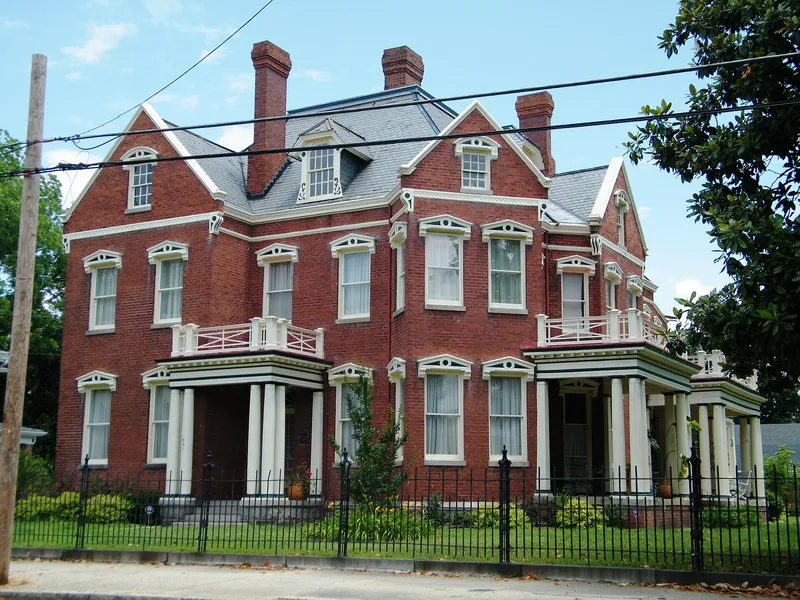
Poplar Lawn Historic District is a neighborhood of about eleven blocks south of downtown Petersburg, Virginia, arranged around a two-block public green. Most of its buildings are two- and two-and-a-half-story houses, mainly white frame with some brick, built in the second half of the 19th century for a middle- to upper-class clientele. Italianate houses dominate, alongside Federal, Georgian, Greek Revival, Second Empire, Queen Anne and Colonial Revival examples, some dating from around 1790. Cast-iron fences and deep setbacks give the streets a consistent character. The park was a muster and drill ground from the War of 1812 through the Civil War, when it also held a temporary hospital. The city bought it in 1846, and in the 1870s it received a goldfish pond, hundreds of trees and curving paths reflecting Olmsted-era landscape ideas. A few modern buildings intrude, but the area has largely escaped high-rise development and urban renewal, keeping its 19th-century appearance.
Machine-generated summary. This summary was generated by a language model from the official nomination document and has not been reviewed line by line by an editor. It may contain errors. Check the source document before relying on any detail. Source: nomination document (PDF) · catalog entry. Generated October 2026 (model claude-sonnet-5-5, prompt v1.0-2026-10-29).
| Styles | Mixed 19th- and early 20th-century styles: Italianate, Greek Revival, Federal, Georgian, Second Empire, Queen Anne, Colonial and Georgian Revival |
|---|---|
| Areas of significance | Landscape Architecture, Military, Education, Architecture |
| Acreage | 61.5 |
| Boundary source | NPS cultural-resource GIS polygon |
| Full listing page | Poplar Lawn Historic District (property record) |
What listing means for this property
This is a historic district. Buildings within its boundary are either contributing (they add to the district's significance) or non-contributing. Owners of contributing income-producing buildings can claim the 20% federal rehabilitation tax credit; homeowners should look at state credits. National Register districts impose no design review by themselves; a local historic district ordinance, if one exists, does (the difference explained).
General information, not legal or tax advice. Rules change; confirm with your State Historic Preservation Office or a qualified adviser.