Pocahontas Historic District

Why it's listed
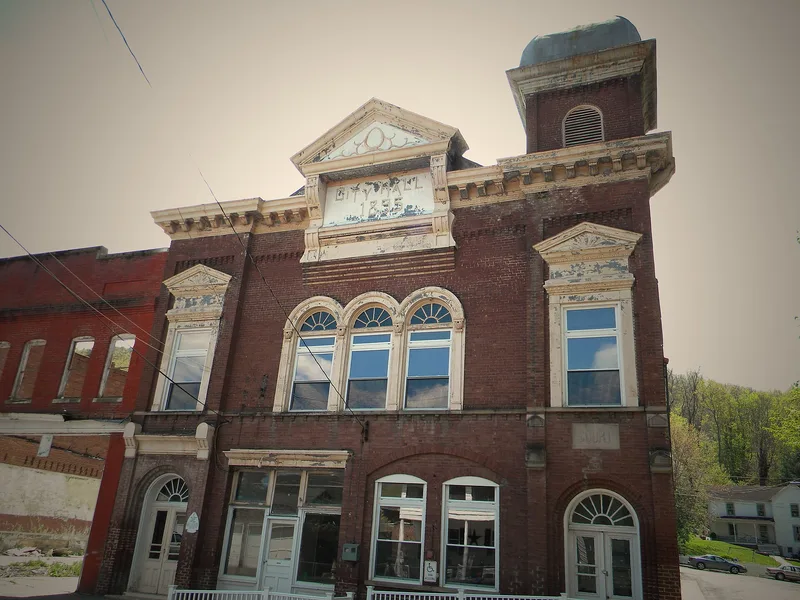
Pocahontas is a coal company town in the Laurel Creek Valley of Tazewell County, Virginia, ringed by hills and laid out along the creek and up the hillsides. Named in 1881, it was built by the Southwest Virginia Improvement Company, which opened the first commercial mining in what became a major coal-producing region. The district includes rows of frame company-built duplex houses, small brick coal sheds on the streets, a commercial Centre Street lined with brick former saloons, the 1895 Italianate City Hall, a Richardsonian bank, churches, and the Exhibition Mine and miners' bathhouse. More than 44,000,000 tons of coal were mined before the mines closed in 1955. The nomination finds no single building of outstanding architectural importance. Its value lies in the way the surviving town expresses the hard, rough life of a nineteenth-century mining community, and in the fact that it has remained almost intact despite industrial decline and population loss.
Machine-generated summary. This summary was generated by a language model from the official nomination document and has not been reviewed line by line by an editor. It may contain errors. Check the source document before relying on any detail. Source: nomination document (PDF) · catalog entry. Generated October 2026 (model claude-sonnet-5-5, prompt v1.0-2026-10-29).
| Period of significance | 1881-1882 |
|---|---|
| Styles | Vernacular company-town architecture, with Queen Anne, Italianate, Richardsonian and vernacular Gothic Revival elements |
| Areas of significance | Industry, Architecture |
| Acreage | 380 |
| Boundary source | NPS cultural-resource GIS polygon |
| Full listing page | Pocahontas Historic District (property record) |
What listing means for this property
This is a historic district. Buildings within its boundary are either contributing (they add to the district's significance) or non-contributing. Owners of contributing income-producing buildings can claim the 20% federal rehabilitation tax credit; homeowners should look at state credits. National Register districts impose no design review by themselves; a local historic district ordinance, if one exists, does (the difference explained).
General information, not legal or tax advice. Rules change; confirm with your State Historic Preservation Office or a qualified adviser.