Pilgrim's Rest

Why it's listed
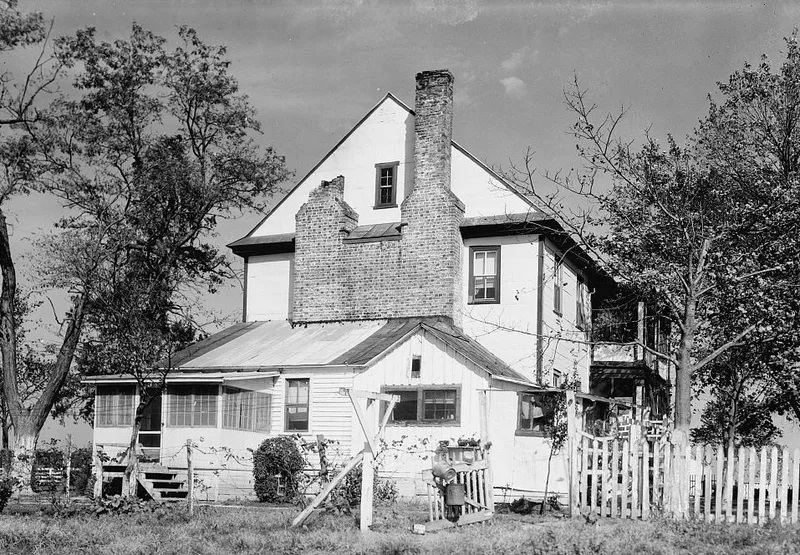
Pilgrim's Rest is a farm south of Nokesville, Virginia, whose main building is a two-and-one-half-story frame house probably built around 1790 by Henry Dade Hooe, near the time of his marriage to Jane Fitzhugh. The property lies along Cedar Run and straddles the Prince William-Fauquier County line. The house follows a Tidewater design uncommon in Northern Virginia, with wide flush siding, a side-passage double-pile plan, a concealed winding stair and a pair of exterior brick chimneys joined by a rare two-story pent closet. Paneled wainscoting, crown moldings and shouldered mantels survive, though some elements were replaced during a 1956 restoration that also added a one-story wing. The estate has also been known as Bellemont Grove and Mount Wesley. Contributing outbuildings include a granary/barn, tool shed and ice house. The district was listed for its architecture and its place among surviving late-eighteenth-century plantation houses in the area.
Machine-generated summary. This summary was generated by a language model from the official nomination document and has not been reviewed line by line by an editor. It may contain errors. Check the source document before relying on any detail. Source: nomination document (PDF) · catalog entry. Generated October 2026 (model claude-sonnet-5-5, prompt v1.0-2026-10-29).
| Period of significance | 1790-1810 |
|---|---|
| Styles | Colonial/Postmedieval English, Southern Colonial |
| Areas of significance | Architecture |
| Acreage | 71 |
| Boundary source | NPS cultural-resource GIS polygon |
| Full listing page | Pilgrim's Rest (property record) |
What listing means for this property
This is a historic district. Buildings within its boundary are either contributing (they add to the district's significance) or non-contributing. Owners of contributing income-producing buildings can claim the 20% federal rehabilitation tax credit; homeowners should look at state credits. National Register districts impose no design review by themselves; a local historic district ordinance, if one exists, does (the difference explained).
General information, not legal or tax advice. Rules change; confirm with your State Historic Preservation Office or a qualified adviser.