Petersburg Old Town Historic District (Additional Documentation)

Why it's listed
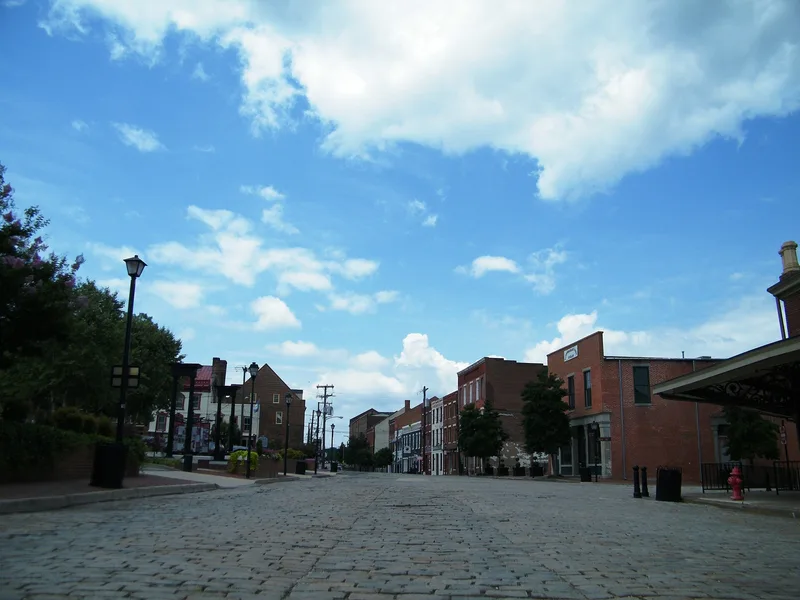
Old Town is the earliest section of Petersburg, Virginia, laid out along the fall line of the Appomattox River. The district covers about 190 acres and more than 250 buildings, mixing homes, shops, warehouses and factories from the late 18th through 20th centuries. Styles range from late Georgian and Federal to Greek Revival, Italianate, Second Empire and Queen Anne. Highlights include early 19th-century worker cottages, the High Street houses, the Greek Revival Exchange Building of 1840-41, and railroad-era depots and warehouses. Its importance comes from both architecture and history: the area grew around Fort Henry and the Peter Jones trading post, became a leading tobacco and milling center by the 1760s, and by 1860 was served by four railroads and a canal. Demolition and neglect have left gaps in the streetscape, but historic zoning since 1973 and rehabilitation along High and Old streets have supported renewal.
Machine-generated summary. This summary was generated by a language model from the official nomination document and has not been reviewed line by line by an editor. It may contain errors. Check the source document before relying on any detail. Source: nomination document (PDF) · catalog entry. Generated October 2026 (model claude-sonnet-5-5, prompt v1.0-2026-10-29).
| Styles | Late Georgian, Federal, Greek Revival, Italianate, Second Empire, Queen Anne, Romanesque Revival, and Colonial/Georgian Revival |
|---|---|
| Areas of significance | Industry, Community Planning and Development, Commerce, Historic - Non-Aboriginal, Military, Transportation, Exploration/Settlement, Architecture |
| Acreage | 190 |
| Boundary source | NPS cultural-resource GIS polygon |
| Full listing page | Petersburg Old Town Historic District (Additional Documentation) (property record) |
What listing means for this property
This is a historic district. Buildings within its boundary are either contributing (they add to the district's significance) or non-contributing. Owners of contributing income-producing buildings can claim the 20% federal rehabilitation tax credit; homeowners should look at state credits. National Register districts impose no design review by themselves; a local historic district ordinance, if one exists, does (the difference explained).
General information, not legal or tax advice. Rules change; confirm with your State Historic Preservation Office or a qualified adviser.