Parkfairfax Historic District

Why it's listed
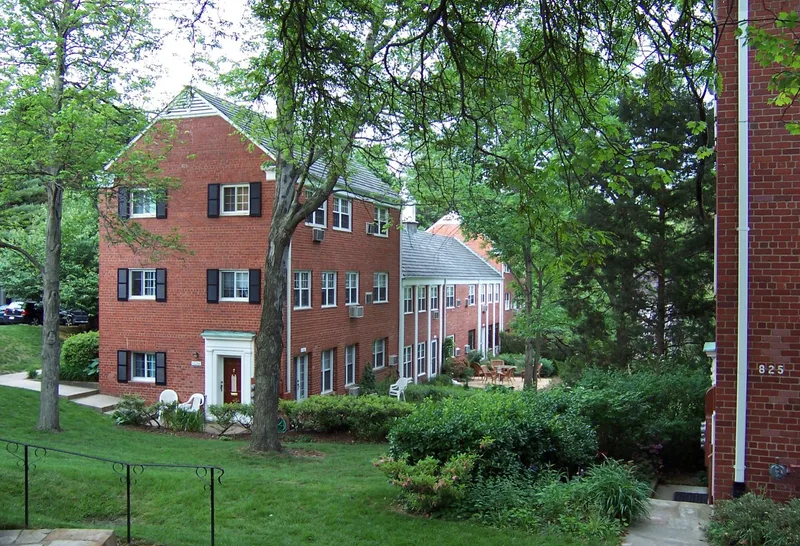
Parkfairfax is a 132-acre garden apartment community in northwest Alexandria, Virginia, built between 1941 and 1943. Metropolitan Life Insurance Company developed it during the wartime housing shortage in the Washington area. It has 285 red brick apartment buildings of two or three stories, with gable roofs and Colonial Revival detailing, containing 1,684 apartments in 25 building types. Leonard Schultze and Associates designed the buildings, Clarke and Rapuano planned the site, and Starrett Brothers and Eken built it. Winding streets, cul-de-sacs, village-green style groupings and preserved woodland keep the buildings to about one-tenth of the land, and utilities were buried underground. Wartime material shortages produced variations in floors and brick. The apartments later became condominiums, and the buildings remain largely unchanged apart from some replacement windows and air conditioners. The district was recognized for its architecture, its community planning and its connection to wartime housing needs.
Machine-generated summary. This summary was generated by a language model from the official nomination document and has not been reviewed line by line by an editor. It may contain errors. Check the source document before relying on any detail. Source: nomination document (PDF) · catalog entry. Generated October 2026 (model claude-sonnet-5-5, prompt v1.0-2026-10-29).
| Period of significance | 1941-1943 |
|---|---|
| Styles | Colonial Revival |
| Areas of significance | Architecture, Community Planning and Development, Politics/Government |
| Acreage | 132 |
| Boundary source | NPS cultural-resource GIS polygon |
| Full listing page | Parkfairfax Historic District (property record) |
What listing means for this property
This is a historic district. Buildings within its boundary are either contributing (they add to the district's significance) or non-contributing. Owners of contributing income-producing buildings can claim the 20% federal rehabilitation tax credit; homeowners should look at state credits. National Register districts impose no design review by themselves; a local historic district ordinance, if one exists, does (the difference explained).
General information, not legal or tax advice. Rules change; confirm with your State Historic Preservation Office or a qualified adviser.