Oakhurst-Gildersleeve Neighborhood Historic District

The National Park Service has not published a boundary polygon for this district; the map shows the listed properties inside it and the district's reference point.
Why it's listed
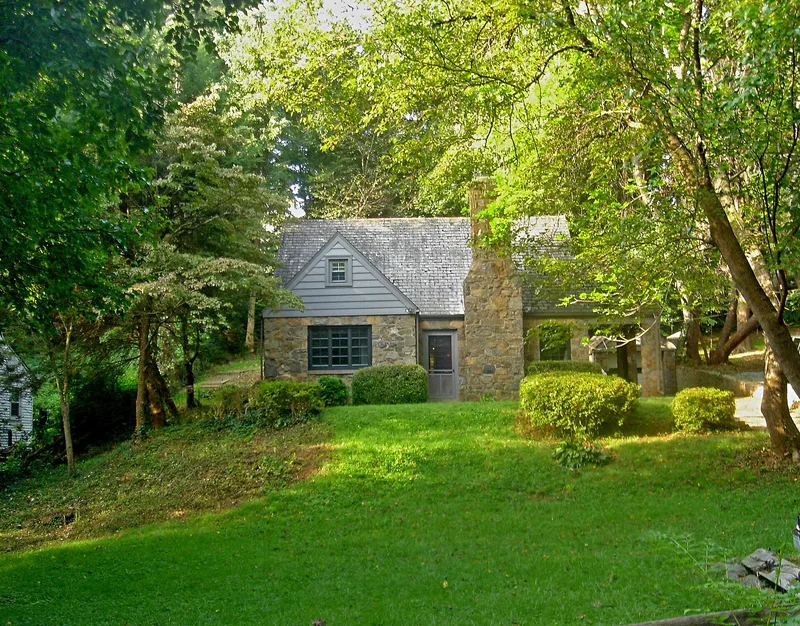
Next to the University of Virginia in southwest Charlottesville, this 25-acre neighborhood grew up around two circular streets, Oakhurst Circle and Gildersleeve Wood, along with Valley Road and Maywood Lane. Oakhurst Circle marks the site of a 19th-century house associated with classics professor Basil Gildersleeve, which burned in 1915. The district holds more than 65 homes, mostly built between the 1910s and 1960s, in Colonial Revival, Craftsman and Tudor Revival styles, plus Cape Cod and other postwar forms. Several were designed by architects including Eugene Bradbury and Milton Grigg. The neighborhood expanded as the university grew in the 1920s and 1930s, supplying housing for faculty, medical school staff and students, including boarding houses. Its original layout and buildings remain remarkably intact, with few modern intrusions. It is recognized for its architecture and for its close link to the university, with a period of significance of about 1912 to 1955.
Machine-generated summary. This summary was generated by a language model from the official nomination document and has not been reviewed line by line by an editor. It may contain errors. Check the source document before relying on any detail. Source: nomination document (PDF) · catalog entry. Generated October 2026 (model claude-sonnet-5-5, prompt v1.0-2026-10-29).
| Period of significance | circa 1912 to 1955 |
|---|---|
| Styles | Colonial Revival; Tudor Revival; Bungalow/Craftsman; Vernacular |
| Areas of significance | Architecture |
| Acreage | 24.8 |
| Boundary source | not published |
| Full listing page | Oakhurst-Gildersleeve Neighborhood Historic District (property record) |
What listing means for this property
This is a historic district. Buildings within its boundary are either contributing (they add to the district's significance) or non-contributing. Owners of contributing income-producing buildings can claim the 20% federal rehabilitation tax credit; homeowners should look at state credits. National Register districts impose no design review by themselves; a local historic district ordinance, if one exists, does (the difference explained).
General information, not legal or tax advice. Rules change; confirm with your State Historic Preservation Office or a qualified adviser.