North Ghent

Why it's listed
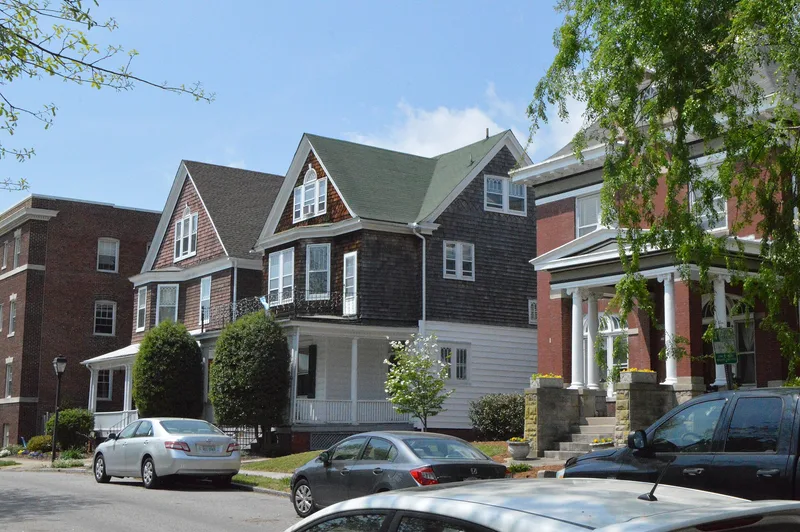
North Ghent is an eighty-acre neighborhood west of downtown Norfolk, Virginia, laid out as a northward extension of the planned suburb of Ghent. Colonial Avenue, platted in 1891, was meant as a grand boulevard for wealthy residents and filled with large houses in Colonial Revival, Queen Anne, French Renaissance and Romanesque Revival styles. In 1897 the boundaries were extended north and west, and building on the new streets began in 1899. Stockley Gardens, a landscaped corridor created in 1900 by filling Colley Creek, became the focal point and drew institutional as well as residential development. A building boom followed between 1900 and 1910, and the area was almost fully built by 1928. The 1907 Jamestown Exposition encouraged red brick Colonial Revival apartment houses. Smaller single-family houses and rowhouses for middle-class buyers mixed Shingle, Tudor Revival, Craftsman and American Foursquare designs. Of 378 properties, 321 contribute to the district's character, which reflects both suburban planning and architectural variety.
Machine-generated summary. This summary was generated by a language model from the official nomination document and has not been reviewed line by line by an editor. It may contain errors. Check the source document before relying on any detail. Source: nomination document (PDF) · catalog entry. Generated October 2026 (model claude-sonnet-5-5, prompt v1.0-2026-10-29).
| Period of significance | 1897-1929 |
|---|---|
| Styles | Colonial Revival, Queen Anne, Shingle Style, Tudor Revival, Italianate, Greek Revival, Classical Revival, French and Italian Renaissance, Bungalow/Craftsman, and others |
| Areas of significance | Architecture, Community Planning and Development |
| Acreage | 80 |
| Boundary source | NPS cultural-resource GIS polygon |
| Full listing page | North Ghent (property record) |
What listing means for this property
This is a historic district. Buildings within its boundary are either contributing (they add to the district's significance) or non-contributing. Owners of contributing income-producing buildings can claim the 20% federal rehabilitation tax credit; homeowners should look at state credits. National Register districts impose no design review by themselves; a local historic district ordinance, if one exists, does (the difference explained).
General information, not legal or tax advice. Rules change; confirm with your State Historic Preservation Office or a qualified adviser.