North Fork Valley Rural Historic District

Why it's listed
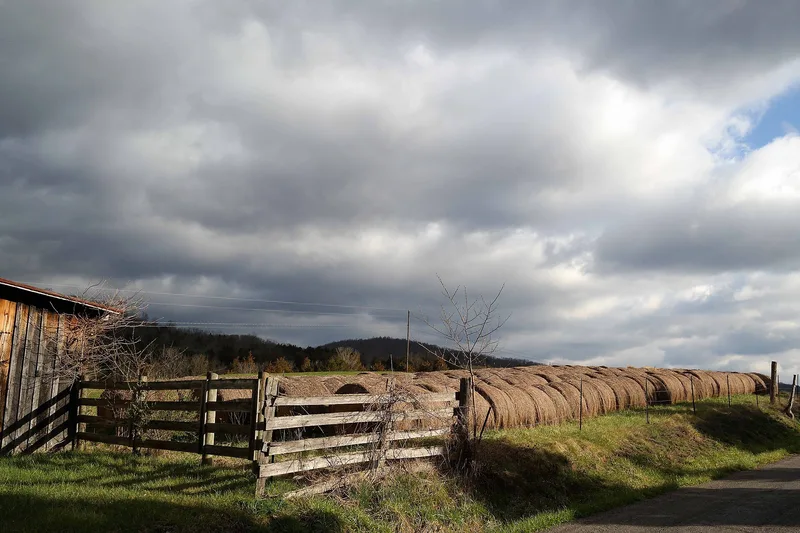
Stretching about nine miles along the North Fork of the Roanoke River in Montgomery County, Virginia, this rural district includes bottomland farms, steep wooded hollows and ridge-top clearings on Paris Mountain. It holds 144 contributing resources, including farmhouses, barns, three standing mills, two churches, an early twentieth-century school and the crossroads village of Lusters Gate. Settlement began in the 1740s and 1750s, and the earliest surviving houses are log dwellings, followed by brick Federal houses such as the Woods-Grubb House, antebellum center-passage houses with Greek Revival trim, and later farmhouses with sawn ornament. The 1850s McDonald Mill and the brick Bennetts Mill reflect local industry, and archaeological testing at the Woods-Grubb Farm found a smokehouse site and a tanyard. Several farms remain with descendants of early builders, and dairy and cattle operations continue on the valley floor, preserving a landscape shaped by successive farming methods.
Machine-generated summary. This summary was generated by a language model from the official nomination document and has not been reviewed line by line by an editor. It may contain errors. Check the source document before relying on any detail. Source: nomination document (PDF) · catalog entry. Generated October 2026 (model claude-sonnet-5-5, prompt v1.0-2026-10-29).
| Styles | Greek Revival; also single pen and parlor plan and center passage plan dwellings |
|---|---|
| Areas of significance | Historic - Non-Aboriginal, Agriculture, Architecture |
| Acreage | 10200 |
| Boundary source | NPS cultural-resource GIS polygon |
| Full listing page | North Fork Valley Rural Historic District (property record) |
What listing means for this property
This is a historic district. Buildings within its boundary are either contributing (they add to the district's significance) or non-contributing. Owners of contributing income-producing buildings can claim the 20% federal rehabilitation tax credit; homeowners should look at state credits. National Register districts impose no design review by themselves; a local historic district ordinance, if one exists, does (the difference explained).
General information, not legal or tax advice. Rules change; confirm with your State Historic Preservation Office or a qualified adviser.