New Castle Historic District (Boundary Increase)

Why it's listed
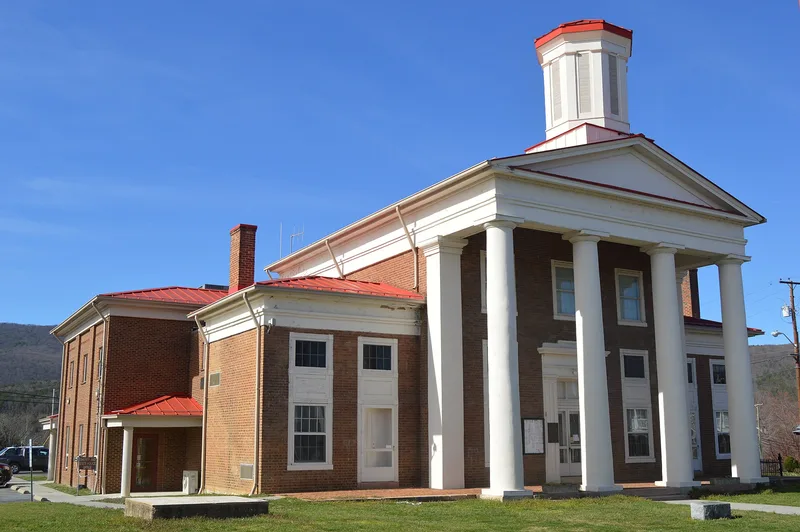
New Castle, the county seat of Craig County, Virginia, is a small town whose historic core was expanded in this boundary increase. William Anderson platted the town in 1818 on a rectangular grid of quarter-acre lots, and the grid was extended in 1834 when the Cumberland Gap Road was surveyed along Main Street. When Craig County was formed in 1851, the town received a Greek Revival courthouse with a Doric portico and cupola and a brick sheriff's office and jail, both built in 1851-1852. Across the street, a tavern was enlarged in 1854-1855 into the Central Hotel. The district also contains log and frame dwellings from the early and mid nineteenth century, I-houses, and brick commercial buildings of the Bank Square Subdivision from 1890 to 1920. Later houses include Queen Anne and Craftsman examples, among them the Spessard House of 1898, designed by mail-order architect George F. Barber. Of the resources in the expanded district, more than 86 percent contribute to its historic character.
Machine-generated summary. This summary was generated by a language model from the official nomination document and has not been reviewed line by line by an editor. It may contain errors. Check the source document before relying on any detail. Source: nomination document (PDF) · catalog entry. Generated October 2026 (model claude-sonnet-5-5, prompt v1.0-2026-10-29).
| Styles | Greek Revival, Italianate, Queen Anne, Stick/Eastlake, Beaux Arts, Colonial Revival, Classical Revival, Bungalow/Craftsman, I-House |
|---|---|
| Areas of significance | Commerce, Transportation, Politics/Government, Architecture |
| Acreage | 70 |
| Boundary source | NPS cultural-resource GIS polygon |
| Full listing page | New Castle Historic District (Boundary Increase) (property record) |
What listing means for this property
This is a historic district. Buildings within its boundary are either contributing (they add to the district's significance) or non-contributing. Owners of contributing income-producing buildings can claim the 20% federal rehabilitation tax credit; homeowners should look at state credits. National Register districts impose no design review by themselves; a local historic district ordinance, if one exists, does (the difference explained).
General information, not legal or tax advice. Rules change; confirm with your State Historic Preservation Office or a qualified adviser.