Muddy Creek Mill

Why it's listed
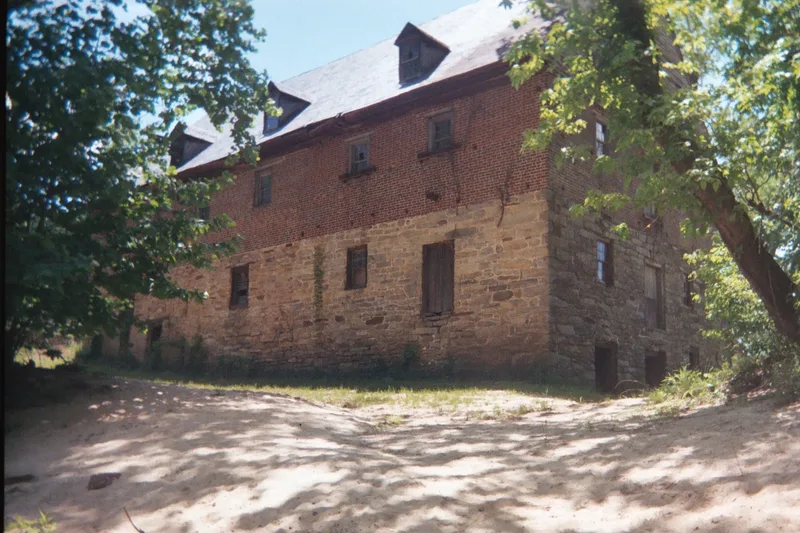
Muddy Creek Mill is a large grist and flour mill in the small community of Tamworth, Cumberland County, Virginia, about a mile from the James River. Begun in the third quarter of the eighteenth century by Nicholas Davies, it reached its present size by 1785 under Richard James and was raised to its current height under a lease agreement of 1792. The building measures roughly thirty-eight by seventy-seven feet, with a sandstone basement and first floor, a brick second floor laid in Flemish bond, and two frame half stories under a slate roof with two tiers of dormers. It is the only known surviving Virginia mill with that dormer arrangement. Inside, a roller-mill system installed around 1910 survives, along with bolting equipment and one stand of millstones. The mill produced flour for local use and for trade on the James River Canal until the 1950s. Nearby are a brick store, a miller's house, a farmhouse and a dairy.
Machine-generated summary. This summary was generated by a language model from the official nomination document and has not been reviewed line by line by an editor. It may contain errors. Check the source document before relying on any detail. Source: nomination document (PDF) · catalog entry. Generated October 2026 (model claude-sonnet-5-5, prompt v1.0-2026-10-29).
| Period of significance | 18th and 19th centuries (specific dates 1785, 1792) |
|---|---|
| Styles | Late-eighteenth-century vernacular industrial architecture |
| Areas of significance | Industry, Commerce, Architecture |
| Acreage | 17 |
| Boundary source | NPS cultural-resource GIS polygon |
| Full listing page | Muddy Creek Mill (property record) |
What listing means for this property
This is a historic district. Buildings within its boundary are either contributing (they add to the district's significance) or non-contributing. Owners of contributing income-producing buildings can claim the 20% federal rehabilitation tax credit; homeowners should look at state credits. National Register districts impose no design review by themselves; a local historic district ordinance, if one exists, does (the difference explained).
General information, not legal or tax advice. Rules change; confirm with your State Historic Preservation Office or a qualified adviser.