Mt. Atlas

The National Park Service has not published a boundary polygon for this district; the map shows the listed properties inside it and the district's reference point.
Why it's listed
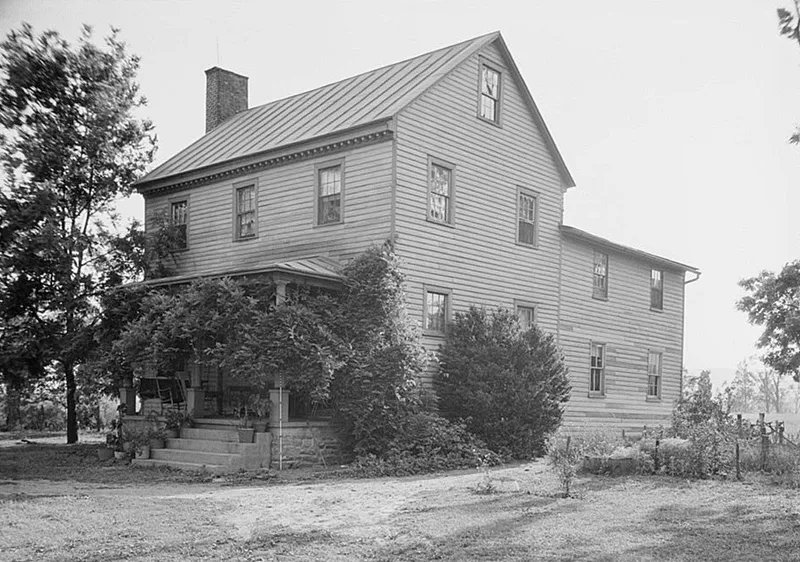
Mt. Atlas is a rural property of about eight acres near Waterfall, north of Haymarket in Prince William County. Its main building is a three-bay, side-hall, frame Georgian house built in 1795 by Peter Whiting and sold in 1801 to Charles B. Carter. The land was once part of Robert "King" Carter's Bull Run Tract. The house keeps its molded boxed cornice with modillions, original flooring, six-panel doors and much early plaster. Its best-known feature is the parlor's carved classical mantel and overmantel, which holds a folk portrait titled Maiden in Prayer, painted around 1830-1840 by an itinerant artist. Later changes include a rear ell, dormers and a front porch added in the early twentieth century. A smokehouse, barn ruins and Carter's grave are also part of the property. The house has stood vacant and deteriorating since structural problems led the owners to build a new residence in 1974, yet its interiors remain largely intact.
Machine-generated summary. This summary was generated by a language model from the official nomination document and has not been reviewed line by line by an editor. It may contain errors. Check the source document before relying on any detail. Source: nomination document (PDF) · catalog entry. Generated October 2026 (model claude-sonnet-5-5, prompt v1.0-2026-10-29).
| Period of significance | 1790-1800, 1870-1910 |
|---|---|
| Styles | Colonial/Georgian; Late Victorian/Victorian Vernacular; 20th Century Revivals/Classical Revival |
| Areas of significance | Architecture |
| Acreage | 8.2 |
| Boundary source | not published |
| Full listing page | Mt. Atlas (property record) |
What listing means for this property
This is a historic district. Buildings within its boundary are either contributing (they add to the district's significance) or non-contributing. Owners of contributing income-producing buildings can claim the 20% federal rehabilitation tax credit; homeowners should look at state credits. National Register districts impose no design review by themselves; a local historic district ordinance, if one exists, does (the difference explained).
Noted as vacant in the nomination. Nomination documents can be decades old; current status may differ. If you are considering buying an empty listed property, read the due-diligence checklist.
General information, not legal or tax advice. Rules change; confirm with your State Historic Preservation Office or a qualified adviser.