Lee Gardens North Historic District

Why it's listed
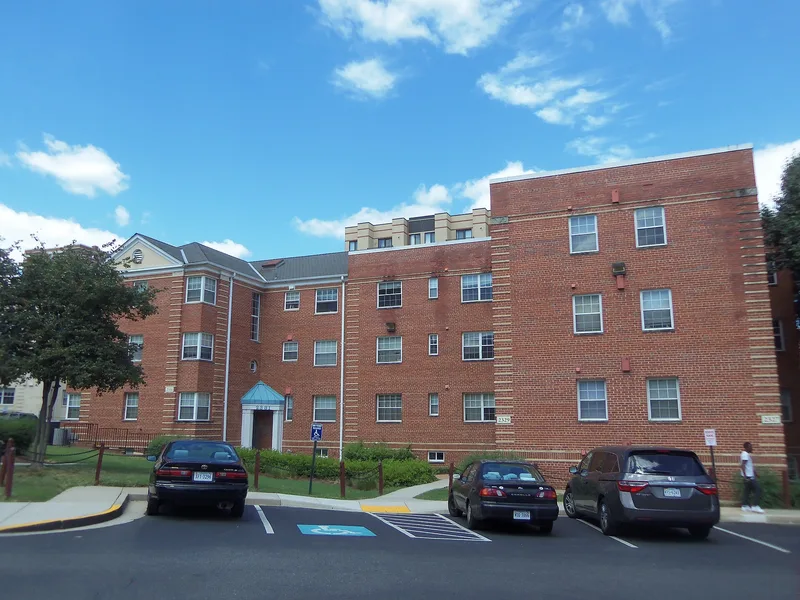
Lee Gardens North is a ten-acre garden apartment complex in the Clarendon-Courthouse neighborhood of Arlington, Virginia, built in 1949-1950. Thirty attached brick structures form seven three-story buildings arranged around courtyards, walkways, playgrounds and a crescent-shaped parklet along North 11th Street. Architect Mihran Mesrobian designed both the buildings and the landscape, while F&W Construction built them for developers Melvin Schlosberg and Fred Schnider. The design is Colonial Revival, with red brick, blonde brick quoins and string courses, half-hipped entry porticoes, and Art Deco and Moderne details such as floral concrete panels and wrapped corner windows. The complex answered the postwar housing shortage, aimed mainly at government employees with families, and offered 359 units. Mesrobian followed many Federal Housing Administration design standards, including service walks and shared entry halls. Its generous open space, light and air made it a strong example of garden apartment planning, and it was listed for both its planning and its architecture.
Machine-generated summary. This summary was generated by a language model from the official nomination document and has not been reviewed line by line by an editor. It may contain errors. Check the source document before relying on any detail. Source: nomination document (PDF) · catalog entry. Generated October 2026 (model claude-sonnet-5-5, prompt v1.0-2026-10-29).
| Period of significance | 1949-1950 |
|---|---|
| Styles | Mixed: Art Deco, Moderne, and Colonial Revival |
| Areas of significance | Community Planning and Development, Architecture |
| Acreage | 14.5 |
| Boundary source | NPS cultural-resource GIS polygon |
| Full listing page | Lee Gardens North Historic District (property record) |
What listing means for this property
This is a historic district. Buildings within its boundary are either contributing (they add to the district's significance) or non-contributing. Owners of contributing income-producing buildings can claim the 20% federal rehabilitation tax credit; homeowners should look at state credits. National Register districts impose no design review by themselves; a local historic district ordinance, if one exists, does (the difference explained).
General information, not legal or tax advice. Rules change; confirm with your State Historic Preservation Office or a qualified adviser.