Homestead Dairy Barns

Why it's listed
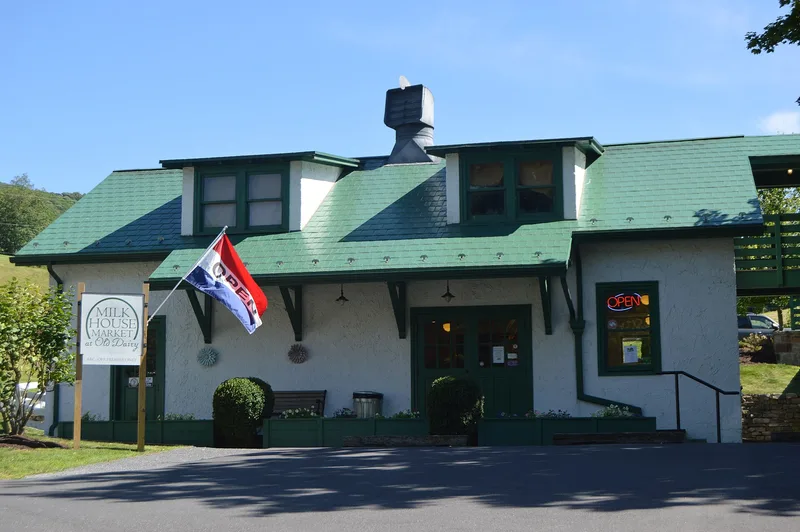
Built in 1928 by the Virginia Hot Springs Company, the Homestead Dairy Barns are a group of seven buildings on a twelve-acre rise at the eastern edge of Warm Springs in Bath County, Virginia. They supplied milk and other farm products to The Homestead resort. A Main Barn with attached tile silos anchors the complex, with a Bottling Building, Milking Barn, Calving Barn and Ham House arranged around it. The Herdsman's Cottage and Bull Barn sit on a knoll across the farm road. All are painted white with dark green trim, mostly stucco over frame or concrete block, with metal shingle roofs. Colonial Revival and Craftsman details appear throughout, including semi-elliptical vents with wooden keystones and Dutch doors. The complex was found significant for its architecture and its well-preserved, cohesive layout, which reflects dairying practice of the second quarter of the twentieth century. Some buildings have been altered, including a 1960s addition to the Ham House and the conversion of the Bull Barn to living quarters.
Machine-generated summary. This summary was generated by a language model from the official nomination document and has not been reviewed line by line by an editor. It may contain errors. Check the source document before relying on any detail. Source: nomination document (PDF) · catalog entry. Generated October 2026 (model claude-sonnet-5-5, prompt v1.0-2026-10-29).
| Period of significance | 1928 - 1956 |
|---|---|
| Styles | Colonial Revival; Bungalow/Craftsman |
| Areas of significance | Architecture |
| Acreage | 12.4 |
| Boundary source | NPS cultural-resource GIS polygon |
| Full listing page | Homestead Dairy Barns (property record) |
What listing means for this property
This is a historic district. Buildings within its boundary are either contributing (they add to the district's significance) or non-contributing. Owners of contributing income-producing buildings can claim the 20% federal rehabilitation tax credit; homeowners should look at state credits. National Register districts impose no design review by themselves; a local historic district ordinance, if one exists, does (the difference explained).
General information, not legal or tax advice. Rules change; confirm with your State Historic Preservation Office or a qualified adviser.