Highland Park-Overlee Knolls

Why it's listed
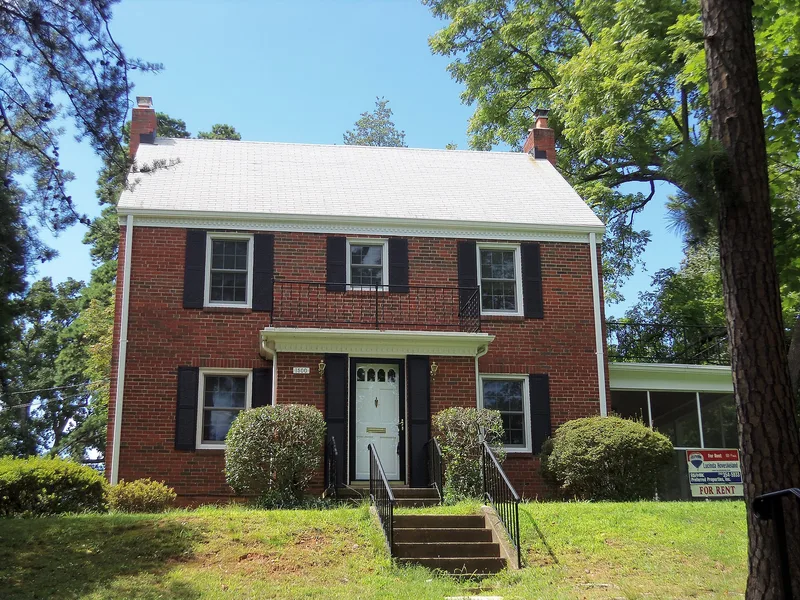
Highland Park-Overlee Knolls is a residential neighborhood of 180.7 acres in northwest Arlington County, Virginia, about five miles west of Washington, D.C. Development began in 1890 with the Fostoria subdivision and continued until the late 1950s and early 1960s, as several large parcels were subdivided and resubdivided by multiple developers and speculative builders. The neighborhood holds roughly 718 properties, mostly single-family houses, along with commercial buildings, a church, a former school, garages, sheds and landscaped parks. Earlier buildings include Queen Anne houses and a vernacular I-house. Later construction includes Colonial Revival, Craftsman bungalow, Tudor Revival, Cape Cod, ranch and split-level houses. World Wars I and II increased the demand for housing near the capital, and Federal Housing Administration guidelines shaped the modest, mass-produced forms of the mid-twentieth century. Together the buildings document the evolution of a middle-class commuter suburb across about seventy years.
Machine-generated summary. This summary was generated by a language model from the official nomination document and has not been reviewed line by line by an editor. It may contain errors. Check the source document before relying on any detail. Source: nomination document (PDF) · catalog entry. Generated October 2026 (model claude-sonnet-5-5, prompt v1.0-2026-10-29).
| Styles | Late Victorian (Queen Anne, Italianate); Colonial Revival; Tudor Revival; Bungalow/Craftsman; Modern Movement |
|---|---|
| Areas of significance | Architecture, Community Planning and Development |
| Acreage | 180.7 |
| Boundary source | NPS cultural-resource GIS polygon |
| Full listing page | Highland Park-Overlee Knolls (property record) |
What listing means for this property
This is a historic district. Buildings within its boundary are either contributing (they add to the district's significance) or non-contributing. Owners of contributing income-producing buildings can claim the 20% federal rehabilitation tax credit; homeowners should look at state credits. National Register districts impose no design review by themselves; a local historic district ordinance, if one exists, does (the difference explained).
General information, not legal or tax advice. Rules change; confirm with your State Historic Preservation Office or a qualified adviser.