High Bridge

Why it's listed
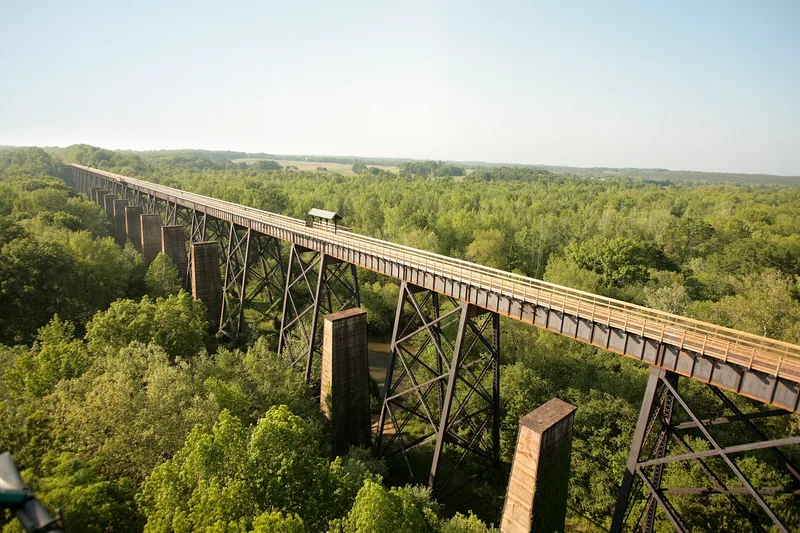
High Bridge is a sixteen-acre district on a former rail line east of Farmville, where two bridges cross the Appomattox River flood plain. The first, built in 1854 for the South Side Railroad, was a timber Burr-arch truss carried on brick piers with granite and sandstone abutments. At 2,400 feet long and up to 125 feet high, it was among the largest bridges in the world in its day. Its wooden superstructure is gone, but both abutments and thirteen brick piers survive. Beside it stands the 1914 steel plate-girder trestle, 2,418 feet long on twenty-one steel towers, built by the Virginia Bridge and Iron Company. The site matters for its role in Virginia's railroad network and for Civil War events, including the 1865 fighting as Confederate forces retreated west. It also shows the change from timber and masonry to steel in bridge building. The old rail corridor is now a pedestrian park.
Machine-generated summary. This summary was generated by a language model from the official nomination document and has not been reviewed line by line by an editor. It may contain errors. Check the source document before relying on any detail. Source: nomination document (PDF) · catalog entry. Generated October 2026 (model claude-sonnet-5-5, prompt v1.0-2026-10-29).
| Period of significance | 1854-1914 |
|---|---|
| Styles | No Style |
| Areas of significance | Engineering, Military, Transportation |
| Acreage | 16 |
| Boundary source | NPS cultural-resource GIS polygon |
| Full listing page | High Bridge (property record) |
What listing means for this property
This is a historic district. Buildings within its boundary are either contributing (they add to the district's significance) or non-contributing. Owners of contributing income-producing buildings can claim the 20% federal rehabilitation tax credit; homeowners should look at state credits. National Register districts impose no design review by themselves; a local historic district ordinance, if one exists, does (the difference explained).
General information, not legal or tax advice. Rules change; confirm with your State Historic Preservation Office or a qualified adviser.