Hicksford-Emporia Historic District

Why it's listed
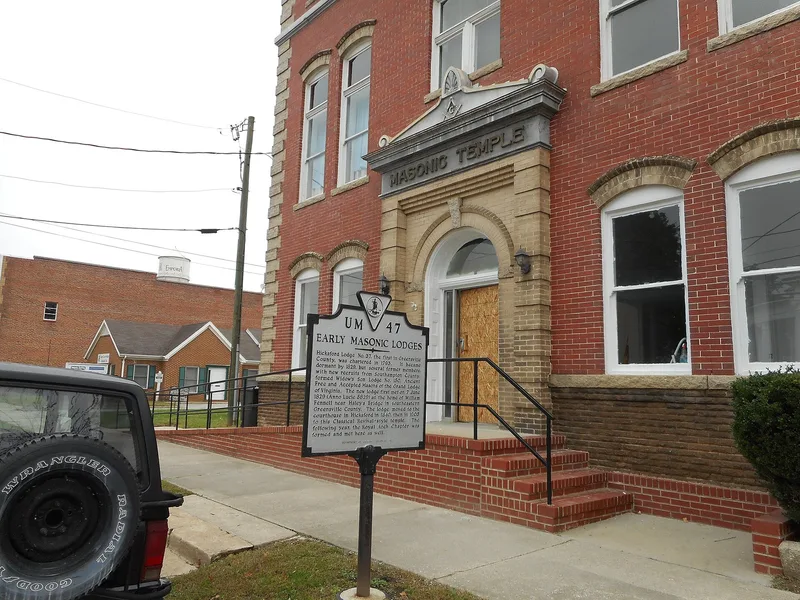
Emporia's historic core is a linear district along South Main Street and the first block of Brunswick Avenue, covering about 19.7 acres. The town formed in 1887 when Hicksford and Belfield merged, and it grew as a railroad-connected agricultural center and county seat. The 1831 Greensville County Courthouse, with its two-story Ionic portico and green, anchors the layout. West of it, one- to three-story brick storefronts with display windows, transoms and corbelled cornices make up the commercial blocks. Notable buildings include the 1902 Merchants and Farmers Bank, the Neo-classical Citizens National Bank, the 1905 Masonic Temple, two early twentieth-century churches, and school buildings from 1907 and 1925. Three Depression-era buildings, the Armory, the County Auditorium and the Post Office with its 1941 mural, were built under the WPA. The district is considered significant for its commercial and governmental development and its commercial architecture. Its period of significance ends in 1957, when Interstate 95 bypassed the town.
Machine-generated summary. This summary was generated by a language model from the official nomination document and has not been reviewed line by line by an editor. It may contain errors. Check the source document before relying on any detail. Source: nomination document (PDF) · catalog entry. Generated October 2026 (model claude-sonnet-5-5, prompt v1.0-2026-10-29).
| Period of significance | Through 1957 (start date not stated in the provided text) |
|---|---|
| Styles | Commercial Style, Neo-Classical, Art Deco |
| Areas of significance | Commerce, Politics/Government, Architecture |
| Acreage | 19.7 |
| Boundary source | NPS cultural-resource GIS polygon |
| Full listing page | Hicksford-Emporia Historic District (property record) |
What listing means for this property
This is a historic district. Buildings within its boundary are either contributing (they add to the district's significance) or non-contributing. Owners of contributing income-producing buildings can claim the 20% federal rehabilitation tax credit; homeowners should look at state credits. National Register districts impose no design review by themselves; a local historic district ordinance, if one exists, does (the difference explained).
General information, not legal or tax advice. Rules change; confirm with your State Historic Preservation Office or a qualified adviser.