Greater Newport Rural Historic District

Why it's listed
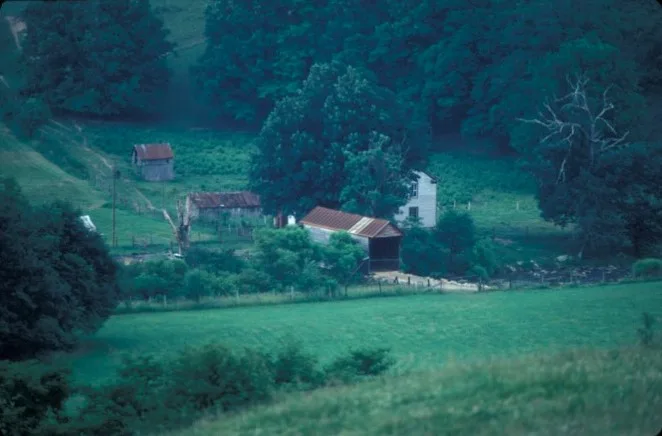
Greater Newport Rural Historic District spans about 21,085 acres in Giles County, Virginia, taking in the valleys of Sinking Creek, Spruce Run, Clover Hollow, Plowscrew and Mountain Lake, all draining toward the New River. Roughly 60 percent of the land is forested and 35 percent is farmland, much of it used for grazing and for hay and corn. The district holds hundreds of contributing resources, chiefly farmsteads with wood-frame houses on fieldstone foundations and utilitarian barns, springhouses and sheds. Dwellings progress from late-eighteenth-century log cabins to Greek Revival, Italianate and Queen Anne houses, with some Sears-type and bungalow homes of the early twentieth century. The district also includes one-room schools, simple churches, gristmills, a textile mill, three covered bridges and the stone Reynolds or Dowdy Iron Furnace. Its agricultural landscape, shaped by limestone soils and mountain boundaries, has kept its historic character, and that continuity supports its listing for historical patterns and architecture.
Machine-generated summary. This summary was generated by a language model from the official nomination document and has not been reviewed line by line by an editor. It may contain errors. Check the source document before relying on any detail. Source: nomination document (PDF) · catalog entry. Generated October 2026 (model claude-sonnet-5-5, prompt v1.0-2026-10-29).
| Styles | Mixed: Greek Revival, Italianate, Late Victorian (Gothic, Queen Anne, Stick/Eastlake), Beaux Arts, Bungalow/Craftsman, plus many buildings with no style |
|---|---|
| Areas of significance | Agriculture, Architecture, Military |
| Acreage | 21371 |
| Boundary source | NPS cultural-resource GIS polygon |
| Full listing page | Greater Newport Rural Historic District (property record) |
What listing means for this property
This is a historic district. Buildings within its boundary are either contributing (they add to the district's significance) or non-contributing. Owners of contributing income-producing buildings can claim the 20% federal rehabilitation tax credit; homeowners should look at state credits. National Register districts impose no design review by themselves; a local historic district ordinance, if one exists, does (the difference explained).
General information, not legal or tax advice. Rules change; confirm with your State Historic Preservation Office or a qualified adviser.