Gordonsville Historic District

Why it's listed
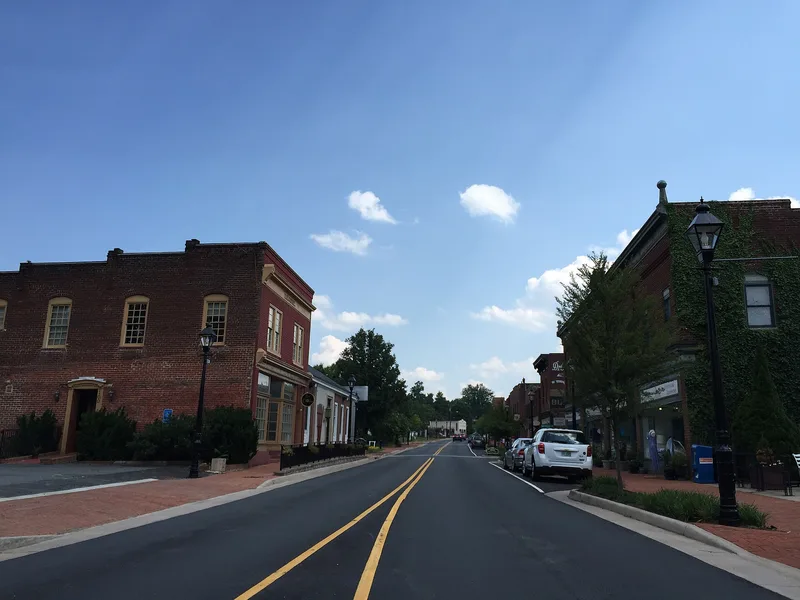
Gordonsville's historic district covers roughly 58 acres along Main Street in Orange County, Virginia, and contains 104 primary buildings. The town began in the 1790s as a crossroads hamlet around Gordon's Tavern. After the Louisa Railroad arrived in 1840, business shifted to the depot area. Northern Main Street became the main residential street, while the blocks near the tracks became the commercial core. The buildings range from the 1850s to the early 20th century. Most are modest frame houses that combine Greek Revival, Italianate and later details with local vernacular forms. Notable examples include the Presbyterian Church of 1855, the Exchange Hotel of 1859, the C.B. Linney House of about 1878 and the Swan-Payne House of 1901. Fires in 1916 and 1920 destroyed most early commercial buildings, and the district was rebuilt largely in brick. Because population growth leveled off in the 1880s, the old neighborhoods stayed stable and the town kept a pre-automobile character, with a walkable downtown near the railroad.
Machine-generated summary. This summary was generated by a language model from the official nomination document and has not been reviewed line by line by an editor. It may contain errors. Check the source document before relying on any detail. Source: nomination document (PDF) · catalog entry. Generated October 2026 (model claude-sonnet-5-5, prompt v1.0-2026-10-29).
| Styles | Mixed vernacular with Greek Revival, Italianate, Gothic Revival, Colonial Revival, Craftsman and Bungalow elements |
|---|---|
| Areas of significance | Transportation, Architecture |
| Acreage | 58 |
| Boundary source | NPS cultural-resource GIS polygon |
| Full listing page | Gordonsville Historic District (property record) |
What listing means for this property
This is a historic district. Buildings within its boundary are either contributing (they add to the district's significance) or non-contributing. Owners of contributing income-producing buildings can claim the 20% federal rehabilitation tax credit; homeowners should look at state credits. National Register districts impose no design review by themselves; a local historic district ordinance, if one exists, does (the difference explained).
General information, not legal or tax advice. Rules change; confirm with your State Historic Preservation Office or a qualified adviser.