Glebewood Village Historic District

Why it's listed
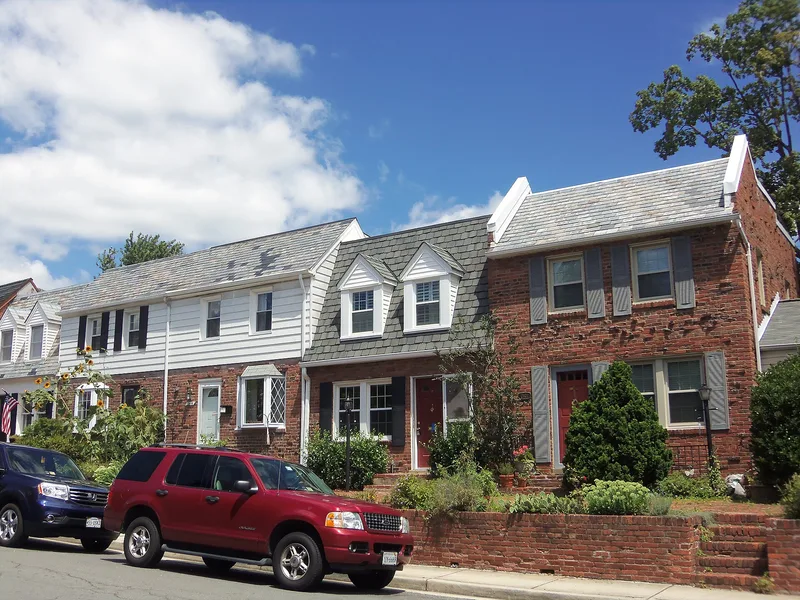
Glebewood Village is a compact neighborhood of 104 attached brick rowhouses in northern Arlington County, Virginia, laid out on nearly six acres around the T-intersection of North Brandywine Street and 21st Road North. Mace Properties, Inc. built it in 1937 and 1938. Each house is two bays wide with a side-gabled roof, skintled brick laid in six-course American bond, paired 6/6 windows and molded wood cornices. Variety comes from three Colonial Revival forms: side-entry houses, which are the most common, central-entry houses, and Cape Cod houses with dormers. Some houses add Tudor-style half-timbering, stone veneer or siding on the upper story. Interiors were originally identical, with a basement, first-floor rooms and two bedrooms and a bath upstairs. The district represents modest, mass-produced suburban housing built to meet the growing needs of the Washington area in the 1930s. No new building has occurred since 1940, and changes have been limited to items such as replacement windows and roofing.
Machine-generated summary. This summary was generated by a language model from the official nomination document and has not been reviewed line by line by an editor. It may contain errors. Check the source document before relying on any detail. Source: nomination document (PDF) · catalog entry. Generated October 2026 (model claude-sonnet-5-5, prompt v1.0-2026-10-29).
| Styles | Late 19th and 20th Century Revivals/Colonial Revival |
|---|---|
| Areas of significance | Community Planning and Development, Architecture |
| Acreage | 5.9 |
| Boundary source | NPS cultural-resource GIS polygon |
| Full listing page | Glebewood Village Historic District (property record) |
What listing means for this property
This is a historic district. Buildings within its boundary are either contributing (they add to the district's significance) or non-contributing. Owners of contributing income-producing buildings can claim the 20% federal rehabilitation tax credit; homeowners should look at state credits. National Register districts impose no design review by themselves; a local historic district ordinance, if one exists, does (the difference explained).
General information, not legal or tax advice. Rules change; confirm with your State Historic Preservation Office or a qualified adviser.