Ginter Park Historic District

Why it's listed
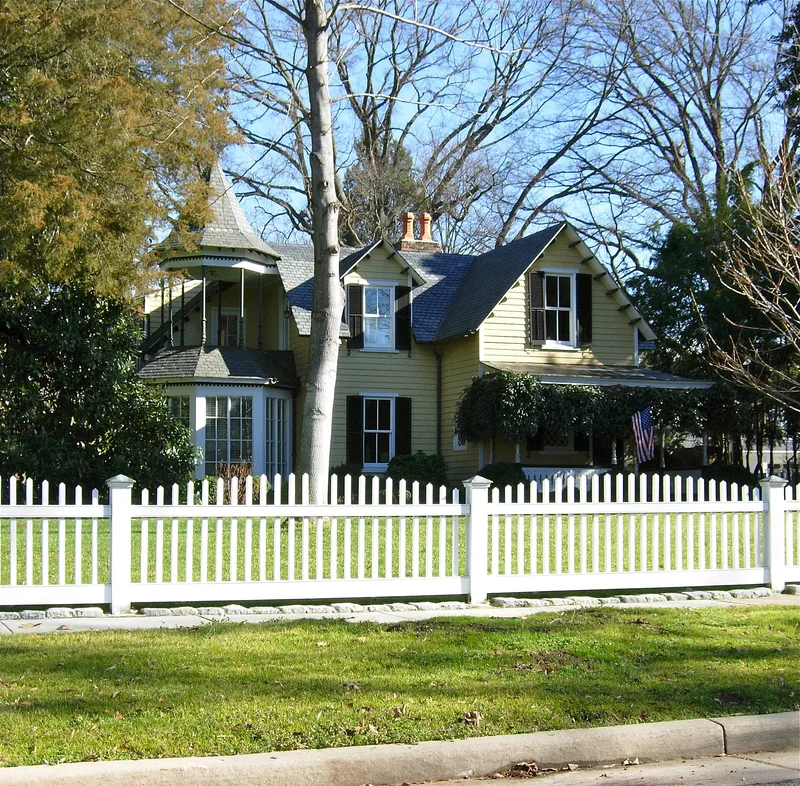
Ginter Park is a planned residential suburb on Richmond's northside, begun in the 1890s by Major Lewis Ginter. Its roughly twenty-one blocks follow a repeating grid with wide divided boulevards, tree-lined sidewalks and large lots about 100 by 250 feet. The district contains 302 contributing buildings, built from the early 1890s through the 1930s, in a wide mix of styles. Queen Anne cottages, Colonial Revival mansions, American Foursquares, Bungalows, Tudor Revival and Shingle Style houses stand side by side, and unusual examples include an Egyptian Revival house and a Spanish Colonial house of step-poured concrete. Community landmarks include the Lewis Ginter Community Center of 1908, financed by Ginter's niece Grace Arents, the 1915 Ginter Park Elementary School, several churches and the Union Theological Seminary Quadrangle designed by Charles H. Read, Jr. The old farmhouse Spring Grange recalls the rural land that preceded development. Chamberlayne Avenue has lost many historic buildings, but the other streets remain largely intact.
Machine-generated summary. This summary was generated by a language model from the official nomination document and has not been reviewed line by line by an editor. It may contain errors. Check the source document before relying on any detail. Source: nomination document (PDF) · catalog entry. Generated October 2026 (model claude-sonnet-5-5, prompt v1.0-2026-10-29).
| Styles | Colonial Revival/Builder's Vernacular predominant; also Queen Anne, American Foursquare, Bungalow, Spanish Colonial, Tudor Revival, Shingle Style, Egyptian Revival |
|---|---|
| Areas of significance | Community Planning and Development, Transportation, Architecture |
| Acreage | 290 |
| Boundary source | NPS cultural-resource GIS polygon |
| Full listing page | Ginter Park Historic District (property record) |
What listing means for this property
This is a historic district. Buildings within its boundary are either contributing (they add to the district's significance) or non-contributing. Owners of contributing income-producing buildings can claim the 20% federal rehabilitation tax credit; homeowners should look at state credits. National Register districts impose no design review by themselves; a local historic district ordinance, if one exists, does (the difference explained).
General information, not legal or tax advice. Rules change; confirm with your State Historic Preservation Office or a qualified adviser.