Galt's Mill Complex

Why it's listed
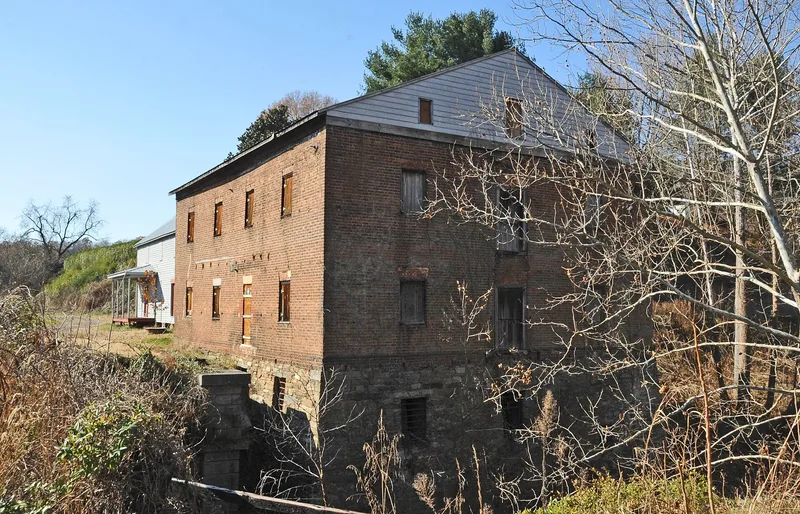
Galt's Mill Complex is a rural mill village on the James River in southeast Amherst County, Virginia, where Stovall Creek, now Beck Creek, meets the river. Its centerpiece is a brick mill dated 1813, surrounded by a c. 1900 store, a c. 1830s stone aqueduct, a boathouse, several vernacular houses and a range of log, frame and concrete barns. The mill was once five and one-half stories but was cut to two stories around 1950 because of structural problems. Inside, hand-planed supports and much of the milling machinery remain, based on an automated system patented by Oliver Evans. The mill operated until 1956. The aqueduct first carried the James River and Kanawha Canal and later a railroad line that still runs through the property. Owners included William Galt, the Warwick family, David Staples and the Turner family. The 535-acre property keeps the look of a working milling community and is protected by a conservation easement.
Machine-generated summary. This summary was generated by a language model from the official nomination document and has not been reviewed line by line by an editor. It may contain errors. Check the source document before relying on any detail. Source: nomination document (PDF) · catalog entry. Generated October 2026 (model claude-sonnet-5-5, prompt v1.0-2026-10-29).
| Styles | Vernacular |
|---|---|
| Areas of significance | Architecture, Industry, Commerce, Transportation |
| Acreage | 535 |
| Boundary source | NPS cultural-resource GIS polygon |
| Full listing page | Galt's Mill Complex (property record) |
What listing means for this property
This is a historic district. Buildings within its boundary are either contributing (they add to the district's significance) or non-contributing. Owners of contributing income-producing buildings can claim the 20% federal rehabilitation tax credit; homeowners should look at state credits. National Register districts impose no design review by themselves; a local historic district ordinance, if one exists, does (the difference explained).
General information, not legal or tax advice. Rules change; confirm with your State Historic Preservation Office or a qualified adviser.