Front Royal Historic District

The National Park Service has not published a boundary polygon for this district; the map shows the listed properties inside it and the district's reference point.
Why it's listed
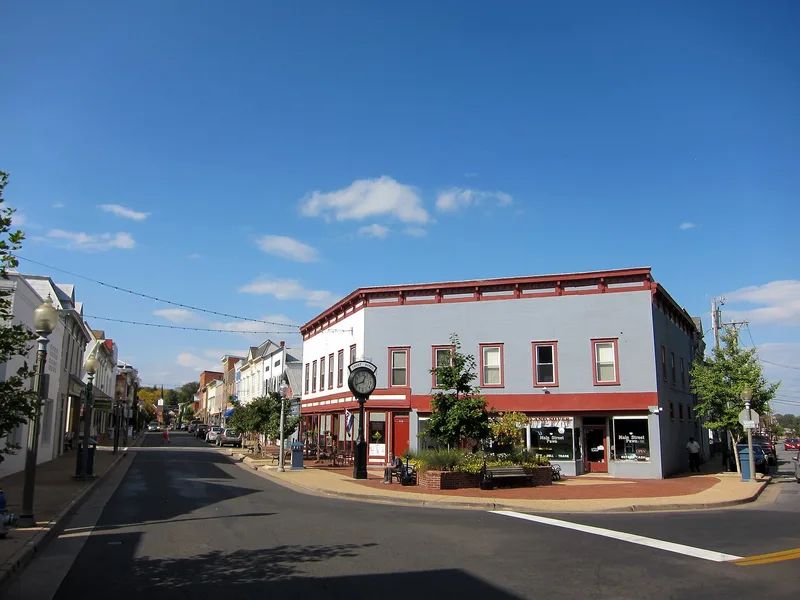
Front Royal's historic district covers about 170 acres at the heart of the town, in the northern Shenandoah Valley of Virginia. It is laid out around East and West Main Street and North and South Royal Avenue, where three early travel routes met and drew settlers to a flat, bowl-shaped valley. The district has a commercial core, a small industrial area along Water Street and Happy Creek, and surrounding residential neighborhoods. Its 523 resources range from the town's founding in 1788 to 1953 and include Italianate storefronts, Queen Anne and Colonial Revival houses, bungalows, and Art Deco and Moderne buildings. The 1936 Warren County Courthouse had already been listed separately. The district was recognized for its role in commerce, transportation, community development, government and Civil War military history, including the Battles of Front Royal, and for its well-preserved range of architectural styles.
Machine-generated summary. This summary was generated by a language model from the official nomination document and has not been reviewed line by line by an editor. It may contain errors. Check the source document before relying on any detail. Source: nomination document (PDF) · catalog entry. Generated October 2026 (model claude-sonnet-5-5, prompt v1.0-2026-10-29).
| Period of significance | 1788 - 1953 |
|---|---|
| Styles | Gothic Revival, Italianate, Queen Anne, Colonial Revival, Classical Revival, Bungalow/Craftsman, Art Deco, Moderne |
| Boundary source | not published |
| Full listing page | Front Royal Historic District (property record) |
What listing means for this property
This is a historic district. Buildings within its boundary are either contributing (they add to the district's significance) or non-contributing. Owners of contributing income-producing buildings can claim the 20% federal rehabilitation tax credit; homeowners should look at state credits. National Register districts impose no design review by themselves; a local historic district ordinance, if one exists, does (the difference explained).
General information, not legal or tax advice. Rules change; confirm with your State Historic Preservation Office or a qualified adviser.