Fort Wool

Why it's listed
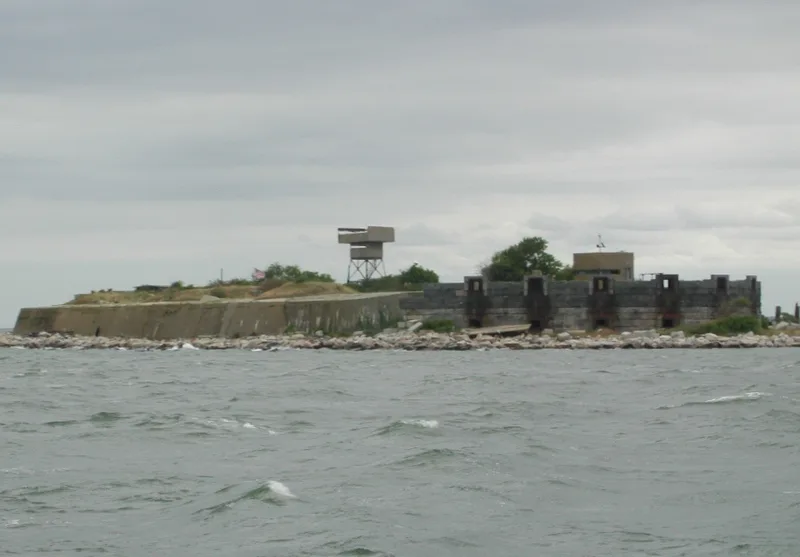
Built on a fifteen-acre island of large granite blocks at the mouth of Hampton Roads, Fort Wool began in 1819 as Fort Calhoun. It was part of a coastal defense plan devised by Secretary of War George Graham that also produced Fort Monroe. Work proceeded slowly until the Civil War, and Robert E. Lee supervised part of the construction. By 1861 the lower tier held fifty-two casemates and 187 men were stationed there. The fort was renamed in 1862 for Major General John Wool, and President Lincoln watched Union troops embark from it to seize Norfolk. After going ungarrisoned from 1886 until World War I, it served again in both World Wars. Surviving features include the western ramparts, Civil War batteries, powder and storage rooms, and World War I and II towers and a command post. Abandoned by 1953 and returned to Virginia in 1967, it stands as a ruin valued for its varied military architecture and harbor setting.
Machine-generated summary. This summary was generated by a language model from the official nomination document and has not been reviewed line by line by an editor. It may contain errors. Check the source document before relying on any detail. Source: nomination document (PDF) · catalog entry. Generated October 2026 (model claude-sonnet-5-5, prompt v1.0-2026-10-29).
| Areas of significance | Military, Architecture |
|---|---|
| Boundary source | NPS cultural-resource GIS polygon |
| Full listing page | Fort Wool (property record) |
What listing means for this property
This is a historic district. Buildings within its boundary are either contributing (they add to the district's significance) or non-contributing. Owners of contributing income-producing buildings can claim the 20% federal rehabilitation tax credit; homeowners should look at state credits. National Register districts impose no design review by themselves; a local historic district ordinance, if one exists, does (the difference explained).
Noted as vacant in the nomination. Nomination documents can be decades old; current status may differ. If you are considering buying an empty listed property, read the due-diligence checklist.
General information, not legal or tax advice. Rules change; confirm with your State Historic Preservation Office or a qualified adviser.