Folly Castle Historic District (Boundary Increase II)

Why it's listed
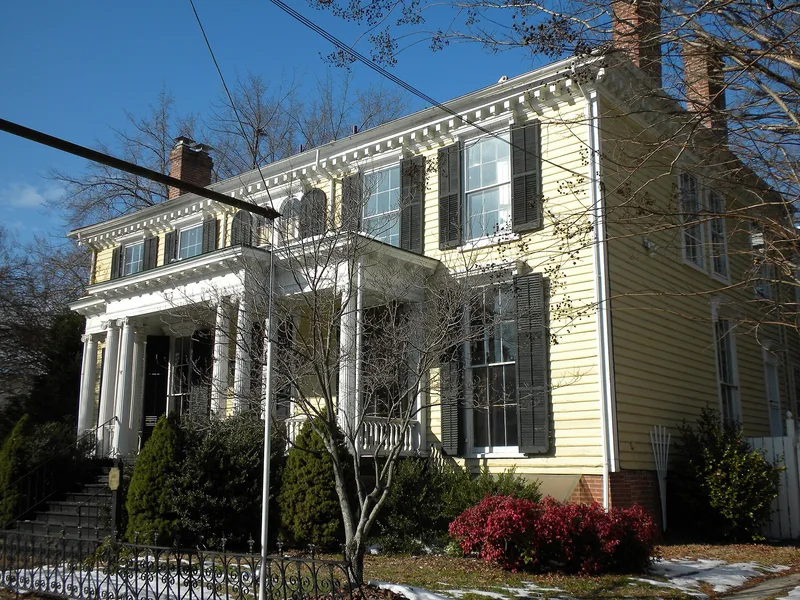
This twelve-block area of Petersburg, Virginia, lies southwest of the city's original commercial and residential core and west of the existing Folly Castle district. It holds 120 contributing buildings, including 109 dwellings, a school, a church, two factories and seven commercial buildings. The larger houses along West Washington Street show Italianate, Queen Anne and Colonial Revival styles, while the cross streets of Pine, Jones and South contain plainer working-class housing, including some of the oldest dwellings. Double houses, a type also called a double tenement locally, are the most numerous special form, with twenty-four identified. Jones Street appears to have been an African-American neighborhood from just after the Civil War, and it contains the only shotgun-type house. Other notable buildings include the 1850s Couch House, an Italian Villa-inspired house on Pine Street, and the 1911 Robert E. Lee Elementary School. The district was recognized for its architecture and its ethnic heritage between 1840 and 1945.
Machine-generated summary. This summary was generated by a language model from the official nomination document and has not been reviewed line by line by an editor. It may contain errors. Check the source document before relying on any detail. Source: nomination document (PDF) · catalog entry. Generated October 2026 (model claude-sonnet-5-5, prompt v1.0-2026-10-29).
| Period of significance | 1840-1945 |
|---|---|
| Styles | Italianate, Queen Anne, Colonial Revival (also Romanesque Revival, Classical Revival, and No Style) |
| Areas of significance | Architecture, Black |
| Boundary source | NPS cultural-resource GIS polygon |
| Full listing page | Folly Castle Historic District (Boundary Increase II) (property record) |
What listing means for this property
This is a historic district. Buildings within its boundary are either contributing (they add to the district's significance) or non-contributing. Owners of contributing income-producing buildings can claim the 20% federal rehabilitation tax credit; homeowners should look at state credits. National Register districts impose no design review by themselves; a local historic district ordinance, if one exists, does (the difference explained).
General information, not legal or tax advice. Rules change; confirm with your State Historic Preservation Office or a qualified adviser.