Fan Area Historic District

Why it's listed
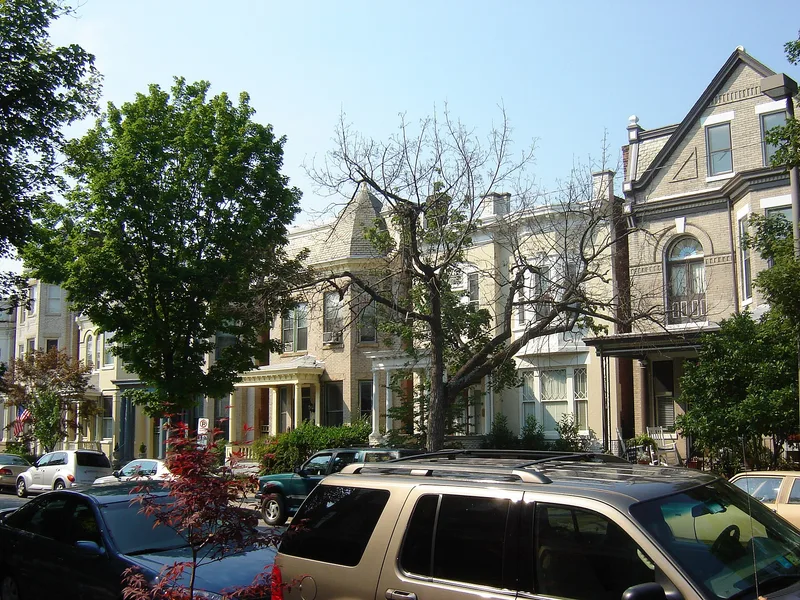
Fan Area Historic District covers 85 blocks of west Richmond, Virginia, between North Harrison Street and North Mulberry Street, and between West Main and West Grace streets. The name comes from streets that radiate westward from Monroe Park, many following early 19th-century turnpikes. Most of the neighborhood was built between 1890 and 1930, with the heaviest construction from 1900 to 1915, when contractors and speculators put up whole blocks of brick row houses and town houses. Typical houses are two or two and a half stories, with frame porches and slate mansard roofs. Italianate, Queen Anne, Richardsonian Romanesque and Colonial Revival designs dominate, and a few earlier buildings survive, including the 1817 Federal-style house known as Columbia. The district holds about 2,370 contributing buildings and few intrusions. Its scale, materials and ornament give it unusual cohesion, and it adjoins the Monument Avenue and West Franklin Street districts. University expansion in the 1970s and 1980s removed older houses on the eastern edge, which set the eastern boundary.
Machine-generated summary. This summary was generated by a language model from the official nomination document and has not been reviewed line by line by an editor. It may contain errors. Check the source document before relying on any detail. Source: nomination document (PDF) · catalog entry. Generated October 2026 (model claude-sonnet-5-5, prompt v1.0-2026-10-29).
| Styles | Italianate, Richardsonian Romanesque, Queen Anne and Colonial Revival predominate; Bungalow, American Foursquare, Tudor Revival, Spanish Colonial and Art Deco also present |
|---|---|
| Areas of significance | Architecture, Community Planning and Development |
| Acreage | 228 |
| Boundary source | NPS cultural-resource GIS polygon |
| Full listing page | Fan Area Historic District (property record) |
What listing means for this property
This is a historic district. Buildings within its boundary are either contributing (they add to the district's significance) or non-contributing. Owners of contributing income-producing buildings can claim the 20% federal rehabilitation tax credit; homeowners should look at state credits. National Register districts impose no design review by themselves; a local historic district ordinance, if one exists, does (the difference explained).
General information, not legal or tax advice. Rules change; confirm with your State Historic Preservation Office or a qualified adviser.