Fairlington Historic District

Why it's listed
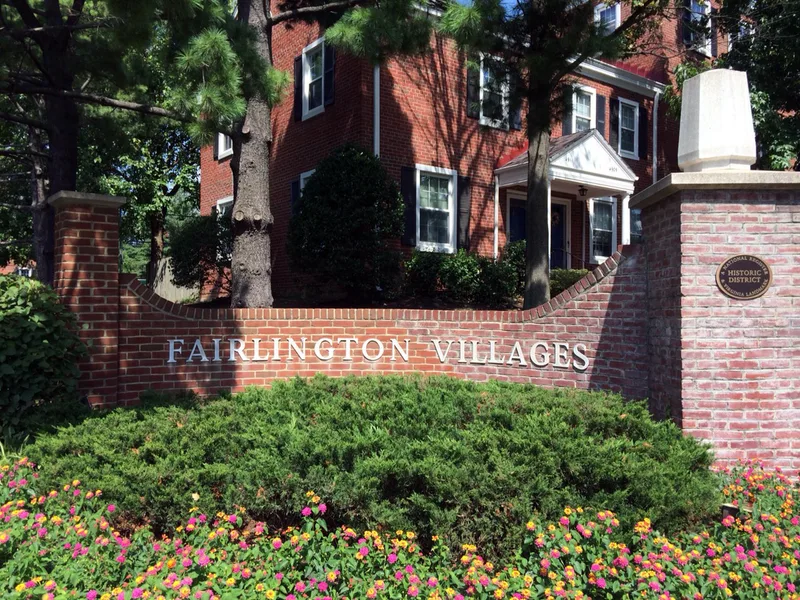
Fairlington is a World War II-era garden apartment and townhouse community straddling Interstate 395 in southwestern Arlington County, with a few buildings in Alexandria. Built between 1942 and 1944, it holds 3,449 units in two sections, North and South Fairlington, along with a firehouse, an elementary school later turned community center, an administration building, and a maintenance facility. Nearly all buildings are Colonial Revival in style, with red brick walls, slate roofs, six-over-six windows, and white wood porches, stoops and trim. Buildings face curving streets or form U-shaped courtyards with central parking. North Fairlington has taller buildings and more apartments, a result of Defense Homes Corporation pausing construction on 1,200 units to add three-bedroom apartments. Conversion to condominiums in the 1970s upgraded interiors with little exterior change. The district counts 1,024 contributing buildings and remains in excellent condition, retaining the plan and appearance of its wartime origin.
Machine-generated summary. This summary was generated by a language model from the official nomination document and has not been reviewed line by line by an editor. It may contain errors. Check the source document before relying on any detail. Source: nomination document (PDF) · catalog entry. Generated October 2026 (model claude-sonnet-5-5, prompt v1.0-2026-10-29).
| Styles | Colonial Revival |
|---|---|
| Areas of significance | Military, Community Planning and Development, Architecture |
| Acreage | 322 |
| Boundary source | NPS cultural-resource GIS polygon |
| Full listing page | Fairlington Historic District (property record) |
What listing means for this property
This is a historic district. Buildings within its boundary are either contributing (they add to the district's significance) or non-contributing. Owners of contributing income-producing buildings can claim the 20% federal rehabilitation tax credit; homeowners should look at state credits. National Register districts impose no design review by themselves; a local historic district ordinance, if one exists, does (the difference explained).
General information, not legal or tax advice. Rules change; confirm with your State Historic Preservation Office or a qualified adviser.