Emory and Henry College

Why it's listed
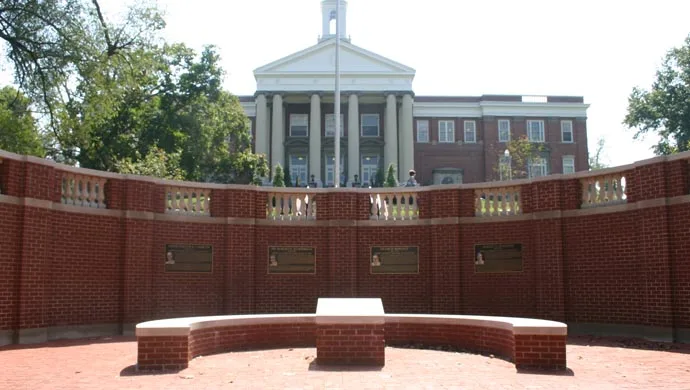
Emory and Henry College occupies a rolling, tree-studded campus in the village of Emory, Washington County, Virginia. Ten buildings form its historic core, set around a pedestrian commons. The oldest are three Greek Revival faculty residences, the Collins, Williams and French houses, built between 1845 and 1852 of brick pressed and fired on the campus. Later buildings include Byars Hall (1889), Waterhouse-Carriger Hall (1904-08), Stuart Hall (1909), the Creed Fulton Observatory (1914, now part of Miller-Fulton Hall), Martin-Brock (1923) and Wiley Hall, rebuilt in 1928 after a fire. The Tobias Smyth log house, originally from the 1770s, was rebuilt on campus in 1929. The college was founded by Methodist and Presbyterian leaders, with its cornerstone laid in 1836, and early faculty modeled its curriculum on Wesleyan University. Alumni include J.E.B. Stuart and R.J. Reynolds. The campus is valued for its well-grouped historic buildings and its history as a liberal arts school.
Machine-generated summary. This summary was generated by a language model from the official nomination document and has not been reviewed line by line by an editor. It may contain errors. Check the source document before relying on any detail. Source: nomination document (PDF) · catalog entry. Generated October 2026 (model claude-sonnet-5-5, prompt v1.0-2026-10-29).
| Styles | Greek Revival (faculty houses); Georgian Revival (Stuart Hall); Romanesque Revival tower on original Byars Hall |
|---|---|
| Areas of significance | Education, Architecture, Religion |
| Acreage | 78 |
| Boundary source | NPS cultural-resource GIS polygon |
| Full listing page | Emory and Henry College (property record) |
What listing means for this property
This is a historic district. Buildings within its boundary are either contributing (they add to the district's significance) or non-contributing. Owners of contributing income-producing buildings can claim the 20% federal rehabilitation tax credit; homeowners should look at state credits. National Register districts impose no design review by themselves; a local historic district ordinance, if one exists, does (the difference explained).
General information, not legal or tax advice. Rules change; confirm with your State Historic Preservation Office or a qualified adviser.