Elks National Home

Why it's listed
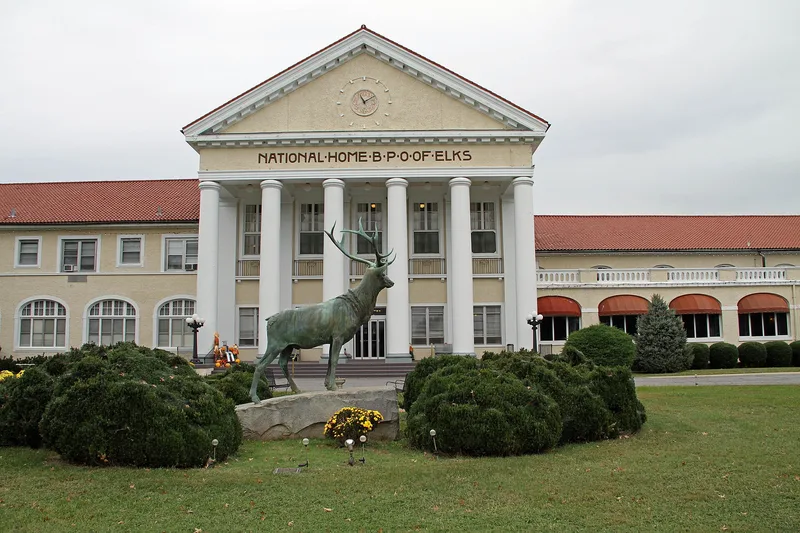
Elks National Home is a district of about 100 acres in Bedford, Virginia, built to house elderly members of the Elks fraternal order. Its centerpiece is the Administration Building of 1916, a two-story Classical Revival and Mediterranean Revival structure with a six-column portico, stuccoed tile block walls and Spanish tile roofs. Arcades link it to seven dormitory cottages arranged in a crescent, with two more cottages, a power house and the 1938 Fred Harper Theatre behind. A farm complex, including a dairy barn of about 1920, supplied the Home and still serves as pasture. Other contributing features include a pond, garden, golf course, a 1925 Harding monument and an elk statue. The Home replaced an earlier hotel-based facility opened in 1903. It is considered notable as a prototype of later retirement communities, offering care at a time when poor farms and almshouses were the usual alternative. It housed more than 400 residents during the Great Depression.
Machine-generated summary. This summary was generated by a language model from the official nomination document and has not been reviewed line by line by an editor. It may contain errors. Check the source document before relying on any detail. Source: nomination document (PDF) · catalog entry. Generated October 2026 (model claude-sonnet-5-5, prompt v1.0-2026-10-29).
| Styles | Classical Revival; Mediterranean Revival |
|---|---|
| Areas of significance | Architecture, Social History |
| Acreage | 100 |
| Boundary source | NPS cultural-resource GIS polygon |
| Full listing page | Elks National Home (property record) |
What listing means for this property
This is a historic district. Buildings within its boundary are either contributing (they add to the district's significance) or non-contributing. Owners of contributing income-producing buildings can claim the 20% federal rehabilitation tax credit; homeowners should look at state credits. National Register districts impose no design review by themselves; a local historic district ordinance, if one exists, does (the difference explained).
General information, not legal or tax advice. Rules change; confirm with your State Historic Preservation Office or a qualified adviser.