D.C. Workhouse and Reformatory Historic District

Why it's listed
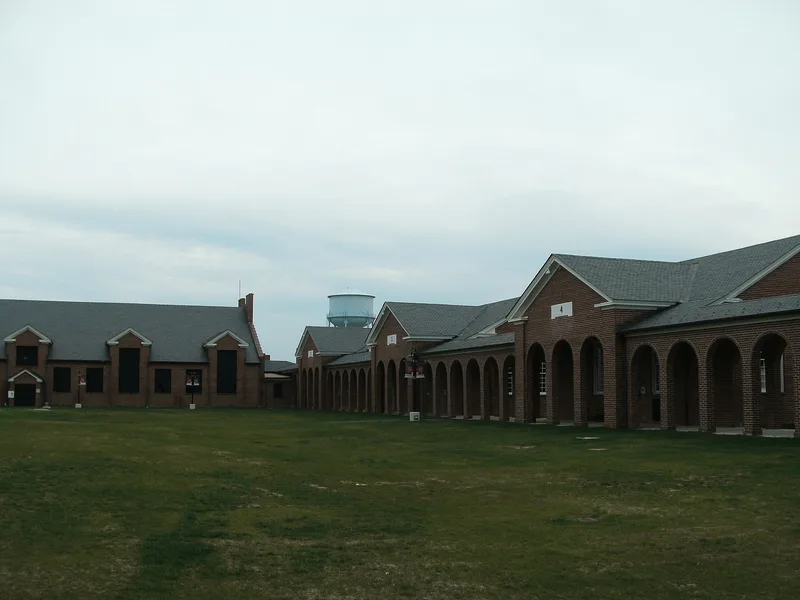
Near Lorton in Fairfax County, Virginia, this 511-acre district preserves a prison complex the District of Columbia began building in 1910. It consists of three brick campuses, the Workhouse, the Reformatory and the Penitentiary, set among fields, pasture, orchards and a brick kiln. Each campus is arranged around a quadrangle with arcades, dormitories or cell blocks, and a dining hall, mostly in Colonial Revival style. The Workhouse and Reformatory were run as open institutions without bars or walls, reflecting Progressive era ideas that work, vocational training and humane surroundings could rehabilitate prisoners. A walled Penitentiary was added in 1930 to hold more serious offenders. Architects Snowden Ashford and Albert Harris designed the buildings, and inmates made most of the bricks and did much of the construction. The prison ran until 2001. The district includes 194 contributing resources from 1910 to 1961, though nearby subdivisions, roads and other development have weakened its setting.
Machine-generated summary. This summary was generated by a language model from the official nomination document and has not been reviewed line by line by an editor. It may contain errors. Check the source document before relying on any detail. Source: nomination document (PDF) · catalog entry. Generated October 2026 (model claude-sonnet-5-5, prompt v1.0-2026-10-29).
| Period of significance | 1910-1961 |
|---|---|
| Styles | Colonial Revival, Beaux Arts, Bungalow/Craftsman |
| Areas of significance | Agriculture, Architecture, Politics/Government, Social History, Industry |
| Acreage | 511.3 |
| Boundary source | NPS cultural-resource GIS polygon |
| Full listing page | D.C. Workhouse and Reformatory Historic District (property record) |
What listing means for this property
This is a historic district. Buildings within its boundary are either contributing (they add to the district's significance) or non-contributing. Owners of contributing income-producing buildings can claim the 20% federal rehabilitation tax credit; homeowners should look at state credits. National Register districts impose no design review by themselves; a local historic district ordinance, if one exists, does (the difference explained).
General information, not legal or tax advice. Rules change; confirm with your State Historic Preservation Office or a qualified adviser.