Court House Hill-Downtown Historic District (Boundary Increase II)

Why it's listed
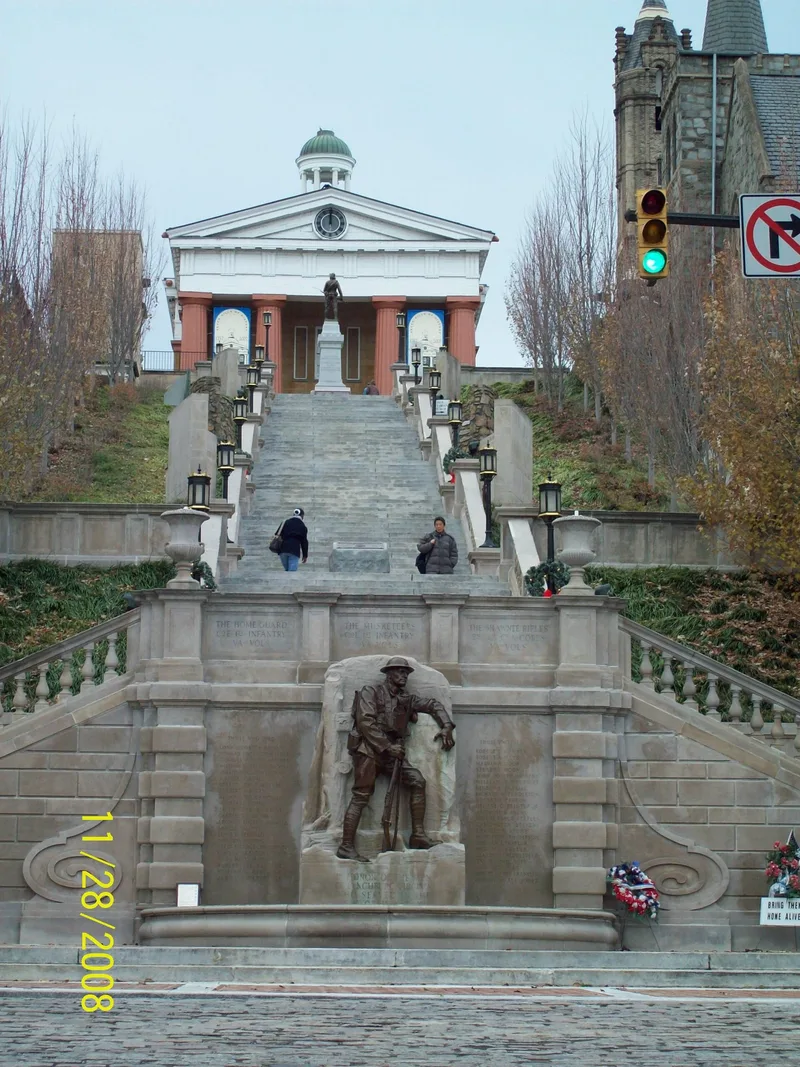
This addition to Lynchburg's downtown historic district takes in 44 resources along Madison and Harrison Streets between 5th and 7th Streets. Thirty-eight are dwellings and six are outbuildings such as garages and sheds. Most date from the late nineteenth century and mark the change from large-lot houses to denser urban housing on small lots set close to the street. Queen Anne frame houses predominate, with porches, sawn brackets, bargeboards and patterned slate roofs. The area also holds a Second Empire house with a slate mansard roof, American Foursquare dwellings, and a brick triple house and double houses. Three buildings predate 1860: a brick house of 1790-1815, an 1810 house with a rubble first floor, and an 1850 central-passage house. The Glass Double House of 1908 is attributed to architect Aubrey Chesterman and was built for Carter Glass. Brick and stone sidewalks and stone retaining walls add to the character. The area was listed for its architecture.
Machine-generated summary. This summary was generated by a language model from the official nomination document and has not been reviewed line by line by an editor. It may contain errors. Check the source document before relying on any detail. Source: nomination document (PDF). Generated October 2026 (model claude-sonnet-5-5, prompt v1.0-2026-10-29).
| Period of significance | 1786-1952 |
|---|---|
| Styles | Early Republic: Federal; Late Victorian: Second Empire, Queen Anne; Late 19th and 20th Century Revivals: Colonial Revival (also American Foursquare) |
| Areas of significance | Architecture, Commerce |
| Acreage | 7 |
| Boundary source | NPS cultural-resource GIS polygon |
| Full listing page | Court House Hill-Downtown Historic District (Boundary Increase II) (property record) |
What listing means for this property
This is a historic district. Buildings within its boundary are either contributing (they add to the district's significance) or non-contributing. Owners of contributing income-producing buildings can claim the 20% federal rehabilitation tax credit; homeowners should look at state credits. National Register districts impose no design review by themselves; a local historic district ordinance, if one exists, does (the difference explained).
General information, not legal or tax advice. Rules change; confirm with your State Historic Preservation Office or a qualified adviser.