Colonial Place

Why it's listed
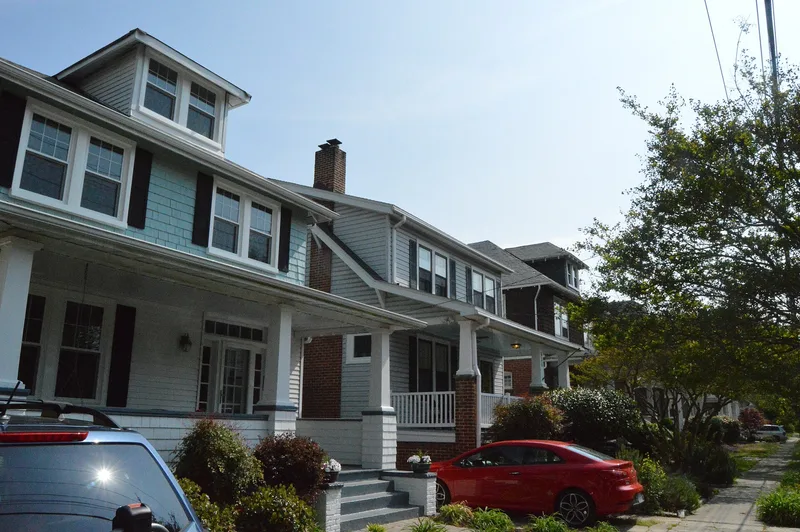
Colonial Place is a planned residential neighborhood in Norfolk, Virginia, set on a peninsula reaching into the Lafayette River. Platted in 1903 by the Sterling Place Company under George W. Dillard, it was laid out with curving streets, tree-lined sidewalks, traffic circles and four small parks. The 1907 Jamestown Exhibition inspired the colonial theme used for the subdivision's name and its streets. Early building was slow, with about nineteen houses by 1911, mostly Colonial Revival, Dutch Colonial Revival and Queen Anne. Wartime demand for housing brought roughly 750 more buildings between 1912 and 1941, and the neighborhood settled into a middle-class community. Craftsman bungalows dominate this later phase, with 393 examples. The district now contains about 913 single-family dwellings, 43 multiple-family dwellings, a school, a church and hundreds of garages and sheds. It was listed for its cohesive planning and its range of early 20th-century architecture.
Machine-generated summary. This summary was generated by a language model from the official nomination document and has not been reviewed line by line by an editor. It may contain errors. Check the source document before relying on any detail. Source: nomination document (PDF) · catalog entry. Generated October 2026 (model claude-sonnet-5-5, prompt v1.0-2026-10-29).
| Styles | Late Victorian/Queen Anne; Colonial Revival and Dutch Colonial Revival; Mission/Spanish Colonial Revival; Tudor Revival; Bungalow/Craftsman; Art Deco |
|---|---|
| Areas of significance | Architecture, Community Planning and Development |
| Acreage | 202 |
| Boundary source | NPS cultural-resource GIS polygon |
| Full listing page | Colonial Place (property record) |
What listing means for this property
This is a historic district. Buildings within its boundary are either contributing (they add to the district's significance) or non-contributing. Owners of contributing income-producing buildings can claim the 20% federal rehabilitation tax credit; homeowners should look at state credits. National Register districts impose no design review by themselves; a local historic district ordinance, if one exists, does (the difference explained).
General information, not legal or tax advice. Rules change; confirm with your State Historic Preservation Office or a qualified adviser.