Clifton Forge Historic District

Why it's listed
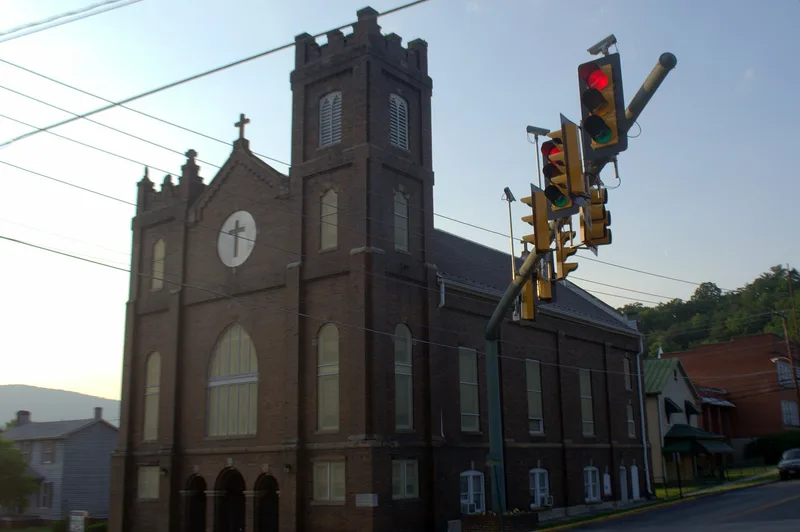
Clifton Forge's residential district covers 174 acres laid out on the town's original 1890 grid, after the Chesapeake & Ohio Railway moved its shops and terminal facilities to the Jackson River. Most of its 730 contributing resources are frame houses built for skilled railroad workers, often constructed by developers and contractors a block at a time. Queen Anne detailing is most common, followed by Bungalow and Colonial Revival houses, and some may be mail-order kit houses shipped by rail. McCormick Boulevard, the widest street, holds the largest homes of business professionals and some railroad managers. The district also contains churches and schools designed by architects from New York, Lynchburg, Roanoke and Covington, along with rowhouses, apartment buildings, a park, a cemetery and an armory. Historically white and African American neighborhoods each kept their own homes, churches and schools, and that layout survives. The district's period of significance runs from 1890 to 1950.
Machine-generated summary. This summary was generated by a language model from the official nomination document and has not been reviewed line by line by an editor. It may contain errors. Check the source document before relying on any detail. Source: nomination document (PDF) · catalog entry. Generated October 2026 (model claude-sonnet-5-5, prompt v1.0-2026-10-29).
| Period of significance | 1890-1950 |
|---|---|
| Styles | Late Victorian (Queen Anne, Second Empire); Late 19th and 20th Century Revivals (Colonial Revival, Tudor, Georgian, Mission/Spanish Colonial, Neo-Classical, Dutch Colonial); Bungalow/Craftsman; Vernacular |
| Areas of significance | Architecture, Black, Community Planning and Development |
| Acreage | 174 |
| Boundary source | NPS cultural-resource GIS polygon |
| Full listing page | Clifton Forge Historic District (property record) |
What listing means for this property
This is a historic district. Buildings within its boundary are either contributing (they add to the district's significance) or non-contributing. Owners of contributing income-producing buildings can claim the 20% federal rehabilitation tax credit; homeowners should look at state credits. National Register districts impose no design review by themselves; a local historic district ordinance, if one exists, does (the difference explained).
General information, not legal or tax advice. Rules change; confirm with your State Historic Preservation Office or a qualified adviser.