Claremont Historic District

Why it's listed
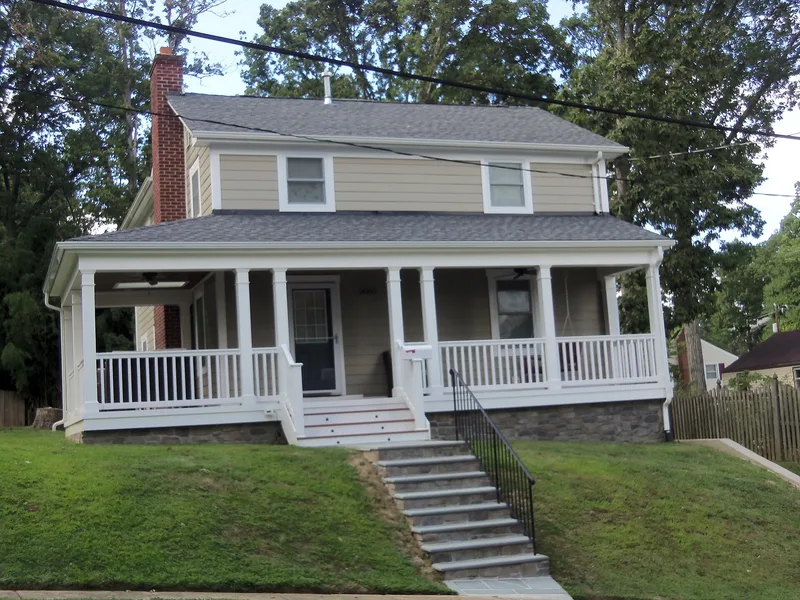
Claremont is a residential neighborhood in southwestern Arlington County, Virginia, along the border with Fairfax County and the City of Alexandria. Most of its houses were built between 1946 and 1949 in two forms: a one-and-a-half-story Cape Cod model and a two-story Colonial Revival model. In 1954 the same developer added thirty-six one-story Ranch houses in the southeast corner. The houses sit on sloping, winding streets, and many in the western section stand above street level behind embankment walls and stairs. Original features include asbestos Waveline shingles, brick chimneys, 6/6 wood windows and Colonial Revival door surrounds. Over time many owners added vinyl or aluminum siding, replacement windows, dormers and porches. The district counts 252 contributing and 84 noncontributing resources, including garages and sheds. It was listed as a locally significant example of a postwar suburb that retains its overall integrity of design, workmanship, feeling and association despite these changes.
Machine-generated summary. This summary was generated by a language model from the official nomination document and has not been reviewed line by line by an editor. It may contain errors. Check the source document before relying on any detail. Source: nomination document (PDF) · catalog entry. Generated October 2026 (model claude-sonnet-5-5, prompt v1.0-2026-10-29).
| Styles | Late 19th and 20th Century Revivals/Colonial Revival; Modern Movement/Ranch Style |
|---|---|
| Areas of significance | Architecture, Community Planning and Development |
| Acreage | 58.9 |
| Boundary source | NPS cultural-resource GIS polygon |
| Full listing page | Claremont Historic District (property record) |
What listing means for this property
This is a historic district. Buildings within its boundary are either contributing (they add to the district's significance) or non-contributing. Owners of contributing income-producing buildings can claim the 20% federal rehabilitation tax credit; homeowners should look at state credits. National Register districts impose no design review by themselves; a local historic district ordinance, if one exists, does (the difference explained).
General information, not legal or tax advice. Rules change; confirm with your State Historic Preservation Office or a qualified adviser.