City of Fairfax Historic District (Additional Documentation)

Why it's listed
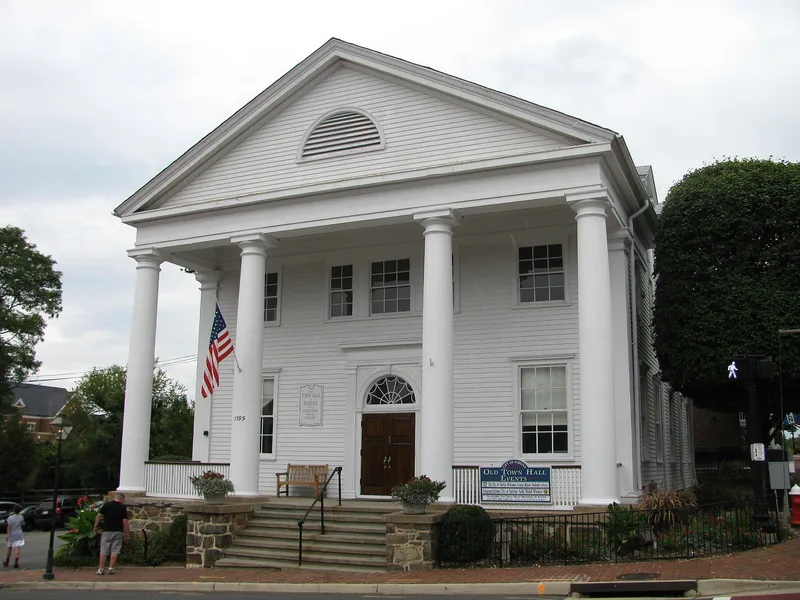
Centered on the 1800 Fairfax County Courthouse, this 24-acre district in the City of Fairfax, Virginia, grew from a crossroads where Little River Turnpike met the Ox Road, now Chain Bridge Road. It contains 48 buildings: commercial blocks, four residences, local government buildings and a church complex. Thirty-two of them contribute to its character. The earliest are brick buildings from the early 1800s, including the courthouse, designed by James Wren, and Earp's Ordinary, a former inn and stagecoach stop. Most of the rest date from the early 20th century, when electric railway lines raised the county's population and the county seat expanded. Colonial Revival design runs through the period, seen in the 1900 Old Town Hall, the 1931 bank and the 1933 Truro chapel. The district is significant for its link to county government and Civil War events, and for streetscapes of two-story brick and wood buildings that keep the feel of a small Main Street town. About 75 percent of the buildings are in commercial use.
Machine-generated summary. This summary was generated by a language model from the official nomination document and has not been reviewed line by line by an editor. It may contain errors. Check the source document before relying on any detail. Source: nomination document (PDF) · catalog entry. Generated October 2026 (model claude-sonnet-5-5, prompt v1.0-2026-10-29).
| Period of significance | 1800; 1861-65; 1890-1933 |
|---|---|
| Styles | Vernacular, with Federal, Greek Revival, Italianate, Georgian Revival and Colonial Revival buildings |
| Areas of significance | Commerce, Politics/Government, Architecture |
| Acreage | 24 |
| Boundary source | NPS cultural-resource GIS polygon |
| Full listing page | City of Fairfax Historic District (Additional Documentation) (property record) |
What listing means for this property
This is a historic district. Buildings within its boundary are either contributing (they add to the district's significance) or non-contributing. Owners of contributing income-producing buildings can claim the 20% federal rehabilitation tax credit; homeowners should look at state credits. National Register districts impose no design review by themselves; a local historic district ordinance, if one exists, does (the difference explained).
General information, not legal or tax advice. Rules change; confirm with your State Historic Preservation Office or a qualified adviser.