Cape Charles Historic District

Why it's listed
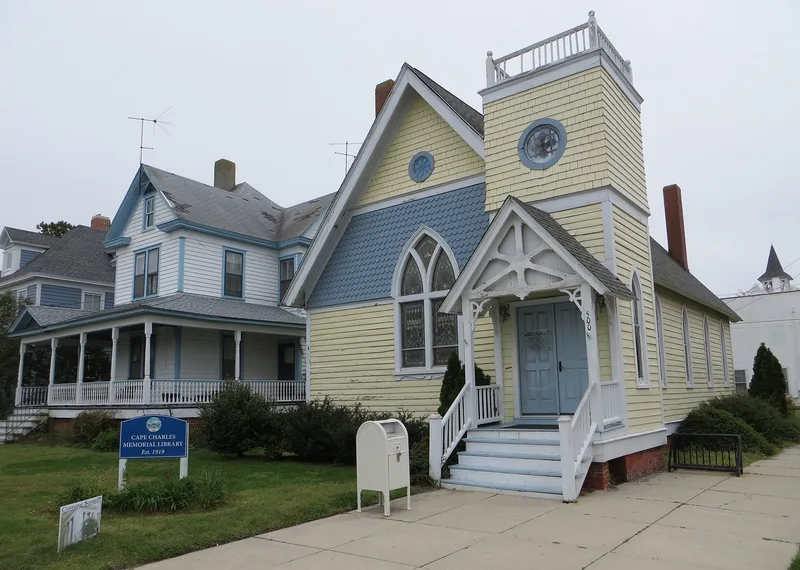
Cape Charles is a railroad town on Virginia's Eastern Shore, planned in 1883-1884 after William L. Scott of the New York, Philadelphia, and Norfolk Railroad bought land on the Chesapeake Bay. Civil engineer William Bauman laid out twenty-seven blocks around a central park, with four wide streets meeting the park at the midpoint of each side. The nomination says no comparable plan is known in Virginia. The district also includes the Sea Cottage Addition, annexed in 1909 and developed as a fashionable residential area. Buildings range from 1885 railroad workers' houses on Tazewell Avenue to brick commercial blocks along Mason Avenue, churches, a 1930 Art Deco municipal building, an ice plant and a power plant. Styles include Queen Anne, Colonial Revival, Bungalow, Neoclassical and Spanish Colonial Revival. Concrete sidewalks, tree-lined green strips and landscaped medians add to the setting. The town's intact plan and building stock explain its listing.
Machine-generated summary. This summary was generated by a language model from the official nomination document and has not been reviewed line by line by an editor. It may contain errors. Check the source document before relying on any detail. Source: nomination document (PDF). Generated October 2026 (model claude-sonnet-5-5, prompt v1.0-2026-10-29).
| Styles | Victorian Italianate, Gothic Revival, Queen Anne, Neoclassical, Colonial Revival, Bungalow/Craftsman, Spanish Colonial Revival, and others |
|---|---|
| Areas of significance | Community Planning and Development, Transportation, Architecture |
| Acreage | 152 |
| Boundary source | NPS cultural-resource GIS polygon |
| Full listing page | Cape Charles Historic District (property record) |
What listing means for this property
This is a historic district. Buildings within its boundary are either contributing (they add to the district's significance) or non-contributing. Owners of contributing income-producing buildings can claim the 20% federal rehabilitation tax credit; homeowners should look at state credits. National Register districts impose no design review by themselves; a local historic district ordinance, if one exists, does (the difference explained).
General information, not legal or tax advice. Rules change; confirm with your State Historic Preservation Office or a qualified adviser.