Bowman-Zirkle Farm

Why it's listed
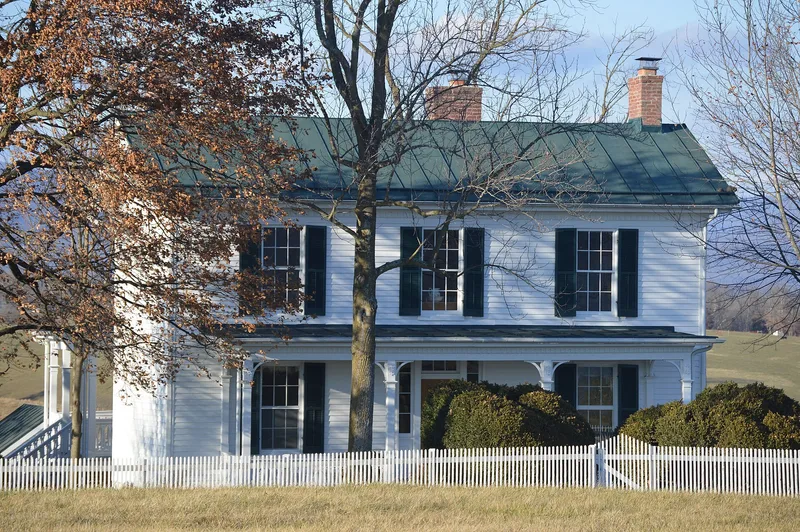
Southwest of Edinburg in Shenandoah County, this 286-acre farm has been worked by the same family since the early nineteenth century. Its buildings stand in a line along Middle Road. At the center is a two-story, three-bay frame I house dated April 1879 on its limestone foundation. It has a rear wing, a wide front porch and sawn-wood decoration. Rear additions were made in 1934, 1958 and 2005, and all follow the historic design. The complex also includes an 1823 summer kitchen, a log-and-frame tenant house moved in the late nineteenth century, a meat house, two bank barns, a granary, a wood-stave silo and a 1920s chicken house. The farm was recognized for architecture. Most I houses built in the county after the Civil War have been altered or poorly maintained. This one remains in outstanding condition with its original footprint readable, making it a significant example of a late-nineteenth-century family farmhouse. Seven later structures are not counted as historic.
Machine-generated summary. This summary was generated by a language model from the official nomination document and has not been reviewed line by line by an editor. It may contain errors. Check the source document before relying on any detail. Source: nomination document (PDF) · catalog entry. Generated October 2026 (model claude-sonnet-5-5, prompt v1.0-2026-10-29).
| Period of significance | 1823-1958 |
|---|---|
| Styles | Late Victorian; Other: Vernacular I House |
| Areas of significance | Architecture |
| Acreage | 285.9 |
| Boundary source | NPS cultural-resource GIS polygon |
| Full listing page | Bowman-Zirkle Farm (property record) |
What listing means for this property
This is a historic district. Buildings within its boundary are either contributing (they add to the district's significance) or non-contributing. Owners of contributing income-producing buildings can claim the 20% federal rehabilitation tax credit; homeowners should look at state credits. National Register districts impose no design review by themselves; a local historic district ordinance, if one exists, does (the difference explained).
General information, not legal or tax advice. Rules change; confirm with your State Historic Preservation Office or a qualified adviser.