Blandy Experimental Farm Historic District

Why it's listed
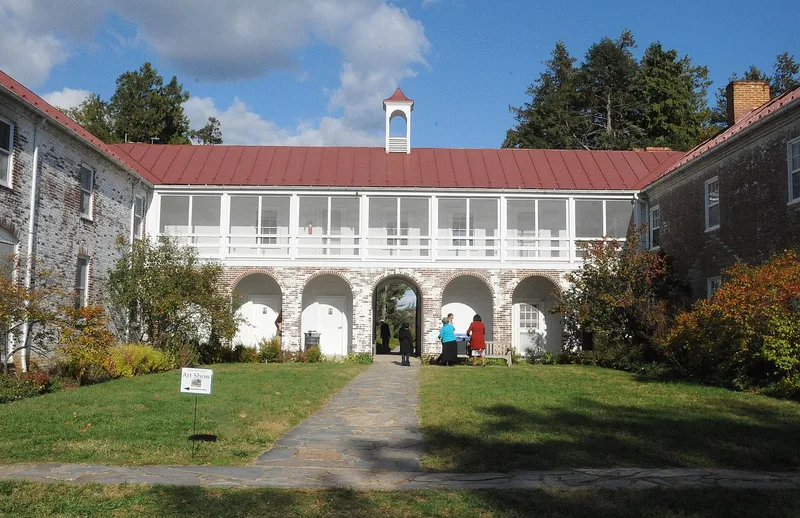
Blandy Experimental Farm occupies 712 acres of farmland, orchards and pasture in Clarke County, Virginia, left to the University of Virginia in 1926 by Graham F. Blandy, whose will required that it be used to teach farming. The land was once part of the Tuleyries estate. The centerpiece is the Quarters, a two-story brick building of about 1825 to 1830 that was built as slave quarters and later converted to laboratories and housing. In 1941 architect Stanislaw J. Makielski added three Colonial Revival wings, forming a U-shaped complex. Other resources include a stone and brick former stable remodeled as a Craftsman-style house, a moved hall-parlor house, a Victorian farmhouse with a bank barn built by Jacob S. Garver, a packing shed, a 1941 greenhouse and early building sites. The Orland E. White Arboretum, begun under the farm's first director, became the State Arboretum of Virginia in 1986.
Machine-generated summary. This summary was generated by a language model from the official nomination document and has not been reviewed line by line by an editor. It may contain errors. Check the source document before relying on any detail. Source: nomination document (PDF) · catalog entry. Generated October 2026 (model claude-sonnet-5-5, prompt v1.0-2026-10-29).
| Styles | Federal; Colonial Revival; Bungalow/Craftsman; Victorian Vernacular; Vernacular Hall-Parlor Plan |
|---|---|
| Areas of significance | Education, Architecture |
| Acreage | 712 |
| Boundary source | NPS cultural-resource GIS polygon |
| Full listing page | Blandy Experimental Farm Historic District (property record) |
What listing means for this property
This is a historic district. Buildings within its boundary are either contributing (they add to the district's significance) or non-contributing. Owners of contributing income-producing buildings can claim the 20% federal rehabilitation tax credit; homeowners should look at state credits. National Register districts impose no design review by themselves; a local historic district ordinance, if one exists, does (the difference explained).
General information, not legal or tax advice. Rules change; confirm with your State Historic Preservation Office or a qualified adviser.